How Can You Develop Healthier Coping Strategies for Your Triggers

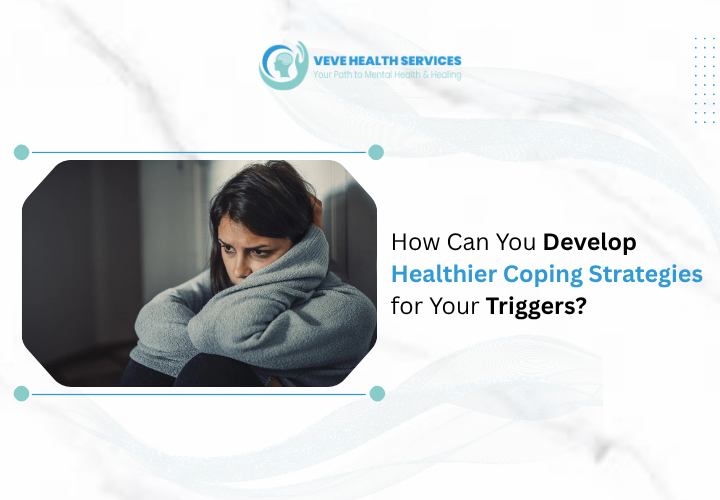
How Can You Develop Healthier Coping Strategies for Your Triggers?

Do you ever feel really upset all of a sudden? Your heart might start racing. You might feel like crying or shouting. This could happen to Anyone. It could be because you are triggered by something or someone.
When you are triggered, your system acts like you are in danger. But you are not always in real danger. Your brain might be just remembering something hard from the past.
The good news is that you can learn to handle your triggers. You can feel calm again. You can feel strong.
At Veve Health Services, we provide individualized mental health support designed around each person’s needs, goals and circumstances. Our care may include evaluation, medication management, psychotherapy, psychoeducation and ongoing follow-up support.
But how can you develop healthier coping strategies for your triggers? Let’s explore some helpful steps.

What Is a Trigger?

A trigger is something that causes a strong emotional or physical reaction. However, triggers are unique to each person.
For some kids, a trigger is a dog barking. For others, it is the darkness. For adults, it may be a crowded room or a specific date.
Your body goes into “fight or flight” syndrome, readying itself to safeguard you when it is no actual threat may be present. This may be confusing and terrifying due to memories or feelings.
Understanding your triggers is the first step to feeling better. Knowing them helps you plan how to cope.

Why Do We Need Good Coping Ways?

Some people cope in ways that do not help. They might:

  • Eat too much candy
  • Hide in their room all day
  • Yell at their family

These things work for a while, but they do not solve the issue. They may make life even more difficult.
But good coping strategies are not. They make you feel better without hurting you or others! They make you calm and in control. They provide courage to overcome challenges.

How Can You Develop Healthier Coping Strategies for Your Triggers?

Step 1: Find Your Triggers

The first step is to notice when you feel upset. Ask yourself:

  • When do I feel scared or mad?
  • What was happening just before?
  • Where was I?
  • Who was with me?
  • What was I thinking?

Write the answers in a notebook. Do this every time you feel a big feeling. After a while, you will see a pattern. You will know your triggers.
For example, you might see that you get nervous before a test or feel sad when you hear a certain song. Once you know your triggers, you can get ready for them.

Step 2: Understand Your Feelings

Sometimes triggers feel confusing. You do not know why you feel so bad. Learning about your feelings can help.
This is called psychoeducation. It just means learning about your mind. When you understand your mind, you feel stronger.
At Veve Health Services, we teach people about their feelings and triggers. We help you understand why your body reacts. This knowledge gives you power. You stop feeling like a victim. You become the boss of your own well-being.

You learn to see warning signs early. You learn to stop a big feeling before it gets too big.

Step 3: Change Your Thoughts

Sometimes, our thoughts intensify our triggers. We convince ourselves of untruths. We frequently expect the worst and question our resilience.
Aim to recognize these thoughts. Reflect on:

  • Is this thought accurate?
  • What supports this belief?
  • Am I focusing solely on the negative?

Next, reframe the thought. Here are examples:

  • Instead of thinking “I can’t do this,” consider “This is challenging, but I can manage it.”
  • Instead of thinking “Everything is ruined,” say “This is just one tough moment. It will pass.”

It takes practice. It might feel strange at first, but it gets easier as your mind embraces these kinder thoughts.

Step 4: Calm Down Right Now

When a trigger hits, you might feel like you are losing control. Your heart pounds. Your hands shake. Your thoughts go round and round.
In that moment, you need tools to calm down. Here are some easy tools:

  • Breathe Slowly. Breathe in for a count of 4 through your nose. Hold it for 1 count. Exhale through the mouth, counting to 4. Repeat three times. Say to your mind that you’re safe.
  • Splash Cold Water on Your Face. Your heart slows down when it’s cold. It makes you feel more stable.
  • Use Your Five Senses. Look around. Name five things you see. Name four things you can touch. Name three things you hear. Name two things you smell. Name one thing you taste. These senses bring you back to the present.
  • Move Your Body. Walk around. Stretch your arms. Shake your hands. Moving helps release tension.
  • Call Someone You Trust. Talk to a friend or a family member. Just hearing a kind voice can help.

These tools are simple. They work. They can calm you down fast.

Step 5: Live a Healthy Life

Good coping is not just about the hard moments. It is also about how you live every day. When you take care of yourself, you are stronger. You can handle triggers better.
Here are some daily habits to practice:

  • Sleep well. Go to bed at the same time each night. Try to get eight hours.
  • Eat good food. Eat fruits and vegetables. Eat healthy proteins. Too much sugar makes you feel worse.
  • Move your body every day. Go for a walk. Dance to music. Play outside. Exercise helps reduce stress.
  • Spend time with people who care. Talk to friends and family. Join a club. Good friends make you feel supported.
  • Do things you like. Read a book. Color a picture. Play a game. Fun things make you happy.

Step 6: Practice Self-Compassion

Learning coping skills takes time. It’s normal to struggle. Be patient and kind to yourself; focus on your growth instead of self-criticism.
Acknowledge small achievements:

  • Did you identify a trigger sooner than you used to?
  • Did you pause for a calming breath instead of reacting immediately?
  • Did you seek help when necessary?

Every positive action counts.

Get the Support You Need

You don’t have to face this alone. Asking for help is completely acceptable and shows strength. Challenges can feel overwhelming. If you’re experiencing persistent sadness or anxiety, connecting with a professional is essential.
Veve Health Services is here to support you with compassionate mental health care. We:

  • Listen to your experiences
  • Help you to understand your symptoms
  • Provide strategies aimed at improving your well-being

We gather information to identify your needs. This helps us:

  • Offer insights into your triggers
  • Equip you with tools to manage distress

Our services include:

  • Medication to ease intense emotions like fear and sadness
  • Both online and in-person visits allow you to choose the option that suits you best

Veve Health serves individuals aged 15 to 65. We prioritize your happiness by creating a personalized plan tailored to you.

Start Today

Developing healthier coping strategies takes time. It takes practice. You will not get it right every time, and that is okay.
What’s important is to continue making efforts. With every new approach, you gain insights. Each time you seek assistance, you become more resilient.
Veve Health Services is ready to help you. Book a visit today. Take the first step. You deserve to feel better.

FAQs

Can changing my thoughts help?

Yes! Question scary thoughts and replace them with positive ones, like “I can handle this.” With practice, it gets easier.

How does caring for my body help with triggers?

Mind and body are connected. Regular exercise, good sleep and healthy food lower stress. They boost mental resilience, so it’s easier to handle triggers.
Adults with PTSD Push Loved Ones Away

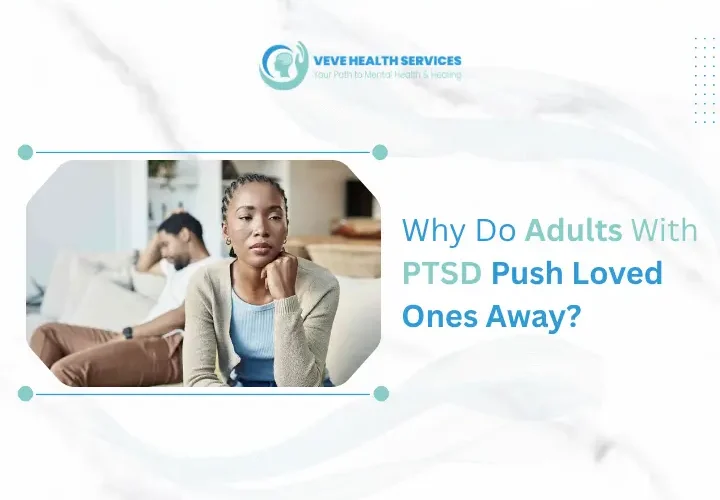
Why Do Adults with PTSD Push Loved Ones Away?

Have you ever had someone you love suddenly pull away from you? Maybe they stop returning your calls. Maybe they seem cold or angry for no reason. Maybe they disappear from your life. If this has happened to you, you might feel confused and hurt. You might wonder what you did wrong.
The truth is, it’s probably not your fault at all! Your loved one may have a condition known as PTSD.
PTSD stands for Post-Traumatic Stress Disorder. It is a mental health condition.
We offer mental health services with compassion at Veve Health Services to help individuals understand their symptoms, manage
emotional issues and develop better relationships.
But why do adults with PTSD push loved ones away? Let’s discuss this.

What Is PTSD?

PTSD develops after someone experiences or witnesses a traumatic event. Trauma may be a result of many things, such as an accident, abuse, natural disaster, or any other frightening event.
Trauma causes the brain to sometimes ‘cling’ to the sense of danger. PTSD can cause feelings of insecurity even while in a calm setting. They may have bad memories that pop into their head without warning. They might feel irritated or anxious at all times.
These symptoms do not resolve without intervention. Sometimes they may persist for several months or several years. And they can make it very hard to be close to other people.

Why Do People with PTSD Push Loved Ones Away?

There are many reasons why a person with PTSD might push you away. None of these reasons mean they do not love you. They have a very hard sickness. Here are the reasons.

They Want to Keep You Safe

This sounds strange, but it is true. Many people with PTSD think they are bad or broken. They think their anger or sadness might hurt you. They may think:

  • “I do not want to upset my family.”
  • “I do not want them to see me this way.”

They think that if they stay away from you, they will not bother you with their problems. They are trying to be nice. But staying away makes you both feel lonely.

They Feel Empty Inside

PTSD can make a person feel numb. This means they cannot feel happy or loving like they used to. This is not their choice. Their brain shuts down certain feelings to ease the pain.
If they cannot feel love, it is hard to show love. They might seem cold. They might not hug you back. They might not say nice things. This makes you feel rejected. But they are just trying to get through the day. They find it difficult to feel.

They Are Scared of Being Hurt Again

Trauma teaches the brain that the world is not safe. The person learns that bad things can happen at any time. When you get close to someone, you open your heart. That can feel very scary.
For someone with PTSD, being close feels like danger. Their brain says, “You got hurt last time you trusted someone. Do not trust anyone again.” So, they push you away before you can hurt them. It is a way to protect themselves. But it also stops love from coming in.

They Find It Hard to Trust

Trust is very hard for people with PTSD. Often, the trauma was caused by another person. Maybe a parent or a friend hurt them. They learned that people are not safe.
Even if you’re a genuinely good person, they might still have a hard time trusting you. They might fear that you’ll eventually leave or even hurt them, too. This can lead them to keep you at a distance since they don’t want to take that chance.

They Feel Very Ashamed

Many people with PTSD feel shame. They blame themselves for what happened. They think they are weak. They think they are not good enough.
When you feel shame, you do not want anyone to see you. You want to hide. You think that if people see the real you, they will not like you. So, they push you away so you cannot see their shame. They do not think they deserve your love.

Their Feelings Are Too Big

PTSD makes it hard to control feelings. The person might get very angry very fast. They might cry without warning. Little things can make them feel overwhelmed.
When you are with other people, you have to act calm. You have to be nice.
For someone with PTSD, this takes a lot of energy. It is so tiring. Sometimes, being alone is easier.
When they are alone, they do not have to pretend. They can let their big feelings out. So, they stay away from you to have space for their feelings.

Things Remind Them of the Bad Event

We call these things “triggers.” A trigger is anything that reminds the person of the trauma. It could be a sound. It could be a smell. It could be a place.
Sometimes, the people we love can be triggers too.
If the trauma was about a relationship, being close to someone can bring back bad memories. Seeing your face might make them think of the bad time. To stop these bad memories, they stay away from you.

They Are Just Trying to Survive

PTSD takes up all of a person’s energy. They are fighting their own brain every day. They deal with bad memories, bad dreams and lots of fear.
When you are just trying to survive, you do not have energy for anything else. The person with PTSD might forget about everyone else. They are not being mean on purpose. They are just so tired. They are in survival mode. All they can think about is making it through the day.

How This Feels for You

If you love someone with PTSD, this is very hard for you. You try to help, but they push you away. You may feel sad, helpless and angry.
You might think:

  • Did I do something wrong?
  • Do they still love me?
  • Should I stop trying?

These feelings are understandable. Being pushed away by someone you care about hurts.
Don’t forget, this is about their sickness, not you. They push you away not for lack of love but due to illness.

What Can You Do?

If your loved one experiences PTSD, here are some ways to support.
First, let them know you are there. You do not have to talk about the trauma. Just say, “I am here if you need me.” That is enough.
Second, be patient. Healing takes a long time. They may need some distance for now. Just give them space, but don’t disappear. Make sure they know you’re still around.
Third, learn more about PTSD. Read about it. Ask a doctor. The more you learn, the less it affects you.
Fourth, take care of yourself. This is very important. It is hard to help someone else if you are tired and sad. Talk to your friends. Go for a walk. Do things that make you happy. You need to stay strong too.

How PTSD Treatment Can Help Rebuild Relationships

PTSD can be managed in relationships. With proper support, individuals can rebuild trust and reconnect with loved ones. Mental health experts help with understanding trauma and coping skills.
At Veve Health Services, we provide mental health care designed to support individuals facing trauma, emotional challenges and relationship struggles.
We offer many kinds of help. We do psychiatric evaluations. That means we take time to learn about you.
We offer medication management. Sometimes medicine helps the brain calm down. We offer talk therapy such as:

This helps people work through their trauma.
We also teach about PTSD. When you understand it, it is easier to handle.
We respect your culture and your beliefs. We treat people of all ages. We help with PTSD and more.

When to Get Help for PTSD Symptoms

It is time to get help if PTSD is making life hard. Signs that help is needed include:

  • Feeling disconnected from loved ones
  • Avoiding relationships or social activities
  • Experiencing frequent fear or anxiety
  • Having difficulty controlling emotions
  • Feeling hopeless or overwhelmed
  • Struggling with trust and communication

Asking for help is a positive step.

Final Thoughts

Why do adults with PTSD push loved ones away? Sometimes, adults with PTSD might avoid being close to others because they are trying to protect themselves from painful emotions, fears, or overwhelming feelings.
This behavior usually does not mean they do not care. In many cases, this means that they are experiencing the impact of trauma.
PTSD can be treated and people can learn to reconnect and enjoy healthier relationships with professional treatment and support.
Veve Health Services is dedicated to providing support, healing and hope to those facing the struggles of PTSD and emotional wellness.
For more information, please reach out to us.

FAQs

Can PTSD ruin relationships permanently?

Not necessarily. Many relationships improve significantly with evidence-based treatment, better communication and mutual understanding.

Should I give someone with PTSD space?

Respecting their need for space while remaining consistently supportive is generally more helpful than forcing interaction.

Why Prioritizing Mental Well Being Improves Productivity

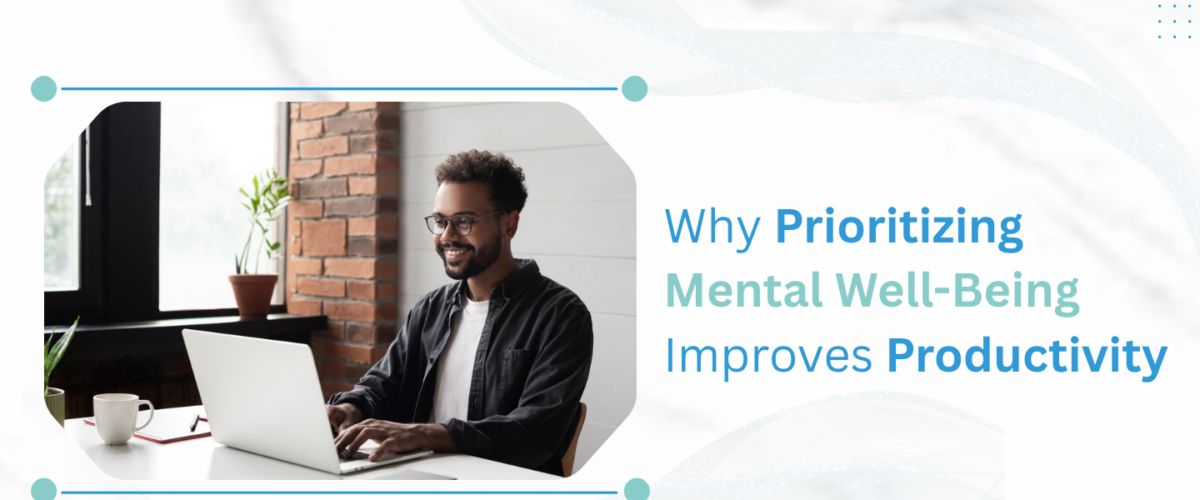
Why Prioritizing Mental Well-Being Improves Productivity

In today’s fast-paced work environment, productivity is often associated with long hours and relentless effort. However, neglecting mental well-being can lead to burnout, reduced efficiency, and poor overall health. For professionals in Virginia and Maryland, prioritizing mental health isn’t just a personal benefit—it’s a strategy for professional success.

The Link Between Mental Health and Productivity

Research consistently shows that employees with strong mental well-being demonstrate:

  • Better focus and decision-making
  • Increased creativity and problem-solving skills
  • Stronger interpersonal relationships in the workplace
  • Lower rates of absenteeism and burnout

Key Strategies to Enhance Mental Well-Being and Productivity

  1. Set Work-Life Boundaries – Avoid overworking by setting clear start and stop times for work.
  2. Incorporate Breaks – Short breaks improve concentration and prevent fatigue.
  3. Prioritize Sleep – A well-rested mind is more effective and resilient.
  4. Seek Professional Support – Therapy or counseling can help manage workplace stressors and personal challenges.

Employer Responsibility in Supporting Mental Health

Progressive companies are recognizing the importance of mental health initiatives. Many employers now offer:

  • Employee Assistance Programs (EAPs) for counseling services.
  • Flexible work arrangements to support work-life balance.
  • Mental health days to promote overall well-being.

Conclusion

Mental health and productivity go hand in hand. By prioritizing self-care and seeking professional support when needed, individuals can enhance their performance and overall quality of life.