
5 Signs Your Stress Has Crossed Into Anxiety

5 Signs Your Stress Has Crossed Into Anxiety

We all know stress. Rent increases, work fills up, something breaks at the worst possible time. It goes on for a while, and then, eventually, it starts to lift. That’s the thing about stress. This is often linked to something real, and when that thing is sorted, you get the wiggle room.
Anxiety doesn’t work that way. The moment there is nothing to worry about, it hangs around. It finds new material. It displays in your body, interferes with your sleep, and then gradually begins to alter the level of courage that you are willing to expend on things that used to feel common. For years, loads of people carry it around without actually declaring it for what it is.
Here are 5 signs to look out for if you feel like what you’re dealing with is bigger than a bad patch, because it could be.

1. You Can’t Come Down Even When Things Are Fine

Resolution usually means some version of relief when it comes to stress. The thing will be dealt with, and eventually it will arrive somewhere within you. Relief is much more difficult to find in the case of anxiety. You get through the stressful thing, and your brain quite literally just shifts to the next possible cause for concern. A quiet evening seems more disturbing than reassuring. It makes you less peaceful, not more.
Many dismiss this as simply being how you are wired. But really struggling to settle, even if circumstances are fine, is something that is worth noticing.

This can look like:

  • Being anxious at the weekend when you should be unwinding
  • Ruminating over conversations or decisions long after there’s anything to repair
  • That non-recharging kind of rest is also telling you something

2. Your Body Is Braced for Something

A lot of people first notice anxiety through physical symptoms, not mental ones. Tension headaches that won’t quit. A stomach that’s been off for months. A heart that beats too fast in situations that aren’t even stressful. Shoulders that are permanently up near your ears.
When your nervous system has been on alert for a long time, these things start to feel like your normal. You stop registering them as unusual. But when a doctor rules out physical causes and nothing quite adds up, anxiety is very often what’s underneath it.

Physical signs to take seriously:

  • Muscle tension or headaches that never fully clear
  • Nausea or digestive issues without a clear dietary cause
  • Chest tightness or the feeling of not quite getting a full breath
  • Fatigue that a full night’s sleep doesn’t actually fix

Your body tends to carry what your mind hasn’t processed yet.

3. Sleep Has Gotten Complicated

You’re trying to focus on during the day. All of what you’ve been running from comes rushing in the second it gets quiet and you crawl into bed. Some spend an hour in bed with their mind spinning around and around. Some will shake off the sleep fine, only to be wide awake at 3 am. Others sleep the entire night and wake up exhausted for different reasons at dawn.

When this goes from being something that happens now and then to just how the nights go, it needs to be taken seriously. Anxiety worsens sleep, and poor sleep worsens anxiety, and without any intervention, that loop can keep running for a long time.

Signs the sleep trouble is anxiety-related:

Signs the sleep problems are anxiety-related:

  • Waking up hours before your alarm and completely tense
  • Mornings when you wake up feeling more tired than when you went to bed

4. You’ve Been Pulling Back From Things

Anxieties mostly have the effect of blowing up the mundanity into something greater than it has any reason to be. So you start sidestepping them. You canceled the dinner. Once again, the call was put off. The opportunity costs are too steep, and you recoil from pursuing it. Taking each decision individually seems wise at the time; but over months they build up and you start to realise how small your world is becoming.

The difficulty with this is that avoidance doesn’t remove the anxiety. It validates in your mind that those things were scary, so that they become more difficult to encounter the next time.

Avoidance can look like:

  • Turning down plans more often, especially anything unpredictable or social
  • Letting messages and emails pile up because opening them feels stressful
  • Stalling on even small decisions because getting it wrong feels like too much

When avoidance starts making choices for you, that’s the anxiety in charge.

5. There’s a Background Feeling You Can’t Quite Name

This one is the hardest to describe but maybe the most common. It’s not a specific fear. It’s more like a low hum of dread that lives underneath everything. A sense that something is about to go wrong, even when nothing is. Feeling braced. Irritable in a way that surprises you. Trouble concentrating not because you’re busy but because your mind keeps pulling somewhere darker.
When you’ve felt this way long enough, it starts to feel like just who you are. But that background feeling of waiting for something bad to happen isn’t a personality type. It’s exhaustion. And it can get better.

Day to day it might feel like:

  • Waking up already tense before you’ve even looked at your phone
  • Snapping at someone and then not really understanding where that came from
  • Feeling drained at the end of a day where nothing particularly hard even happened

Living this way is not inevitable, and most people haven’t been told that clearly enough.

This Is Worth Talking to Someone About

You don’t need every one of these signs to apply. If two or three of them felt familiar, that’s enough. Anxiety responds really well to the right support, but most people wait far longer than they need to before reaching out.
At Veve Health in Gainesville, VA, we offer psychiatric care, therapy, and telehealth services for people across Virginia. We take a holistic approach and actually take the time to understand what’s going on with you before building any kind of plan.
You can reach us at +1 (888) 407 8533 or visit vevehealth.com to book an appointment. If something here felt familiar, that’s a good enough reason to call.

We listen. We care. We heal.
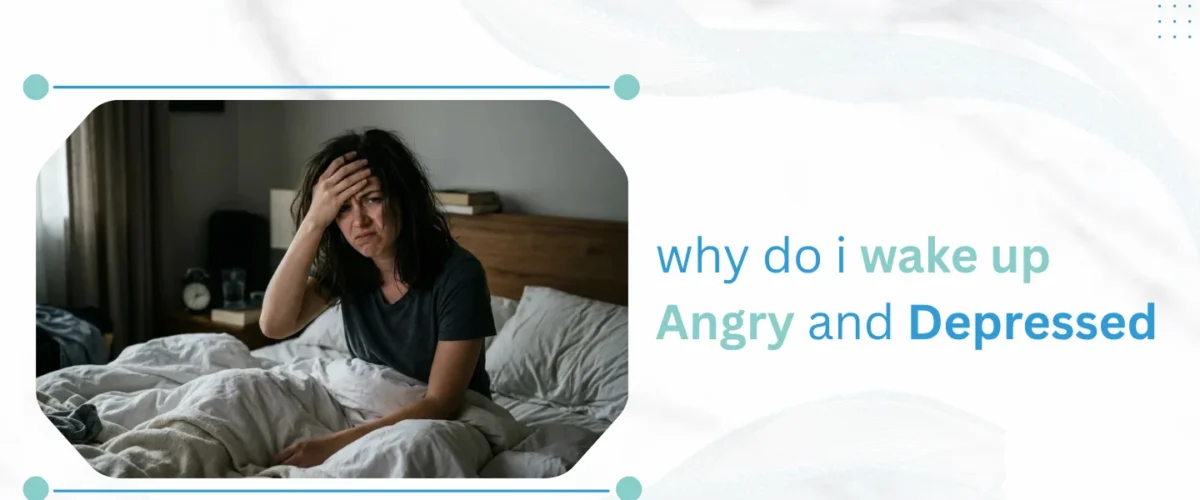
Wake Up Angry and Depressed

Why Do I Wake Up Angry and Depressed?

You open your eyes and it is already there. That heaviness. That edge. Before you have checked your phone, before anyone has said a word to you, before the day has given you a single reason. You are just already in it.
If this is a regular thing for you, first: you are not broken. And second: there is almost always a reason. The morning rageyou experience, or that heavy feeling of waking up in a bad mood, does not come out of nowhere. It is your body and brain telling you something, and it is worth listening to.

Your Brain Does Not Actually Switch Off When You Sleep

Here is something most people do not realize. While you are asleep, your brain is doing a tremendous amount of work. It is processing emotion, regulating hormones, cycling through sleep stages, and essentially preparing your whole system for the next day. When any part of that process is off, you feel it the moment you wake up angry.
So when you open your eyes already irritable or already low, that is not a character flaw. That is a signal. Your system is trying to communicate with you.

Why You Might Be Waking Up Angry

If you keep asking yourself “why do I wake up angry“ or “why do I wake up angry for no reason,“ you are not alone in this. For some reason, we get embarrassed about being angry in the morning. This does not conform with the neat narrative we have around mental health struggles. But its not just common, it has a reason behind it.

Your sleep quality matters more than you think

When you are not getting good quality sleep, the part of your brain that manages emotional regulation simply does not work the way it should. Things feel sharper, more irritating, harder to let go of. You are not more of an angry person. You are a tired frustrated person whose nervous system has run out of buffer.
If this has been going on for a while, that low, reactive baseline —  that feeling of waking up angry – can start to feel like just who you are in the mornings. It is not.

Sleep apnea is worth ruling out

A lot of people carry this one around completely undiagnosed. Sleep apnea interrupts your breathing repeatedly through the night, waking your body briefly over and over, even when you have no memory of it happening. You think you slept. Your body knows otherwise.
The signs are often subtle: grumpy waking up, waking up with headaches, feeling tired even after a full night in bed, or noticing that your mood in the mornings is consistently worse than it should be. It is worth asking your doctor about.

What you drink in the evenings affects your mornings

Even one or two glasses of wine can quietly disrupt the second half of your sleep. Alcohol helps you fall asleep but it fragments REM sleep, which is the stage most responsible for emotional processing. You wake up having technically slept but without the restoration that actually matters. The result is often irritability and a lower emotional baseline first thing in the morning – and a big reason so many people wake up angry without understanding why.

Depression can look like anger

This is a big one and gets talked about not nearly enough. Crying or sadness are not always the signs of depression. For many, especially men but not only, it shows up as irritability, frustration, a short fuse and that special kinda heavy that is so much like the mornings you wake up angry. If you keep waking up in a bad mood and cannot trace the reason for these feelings back to anything specific, depression is an option to explore.

Why You Might Be Waking Up Depressed

Feeling defeated before the day has begun. A lot of folks are already familiar with it, and have going through it for years.

Morning is genuinely the hardest time for depression

This is a clinical term with an actual name: diurnal mood variation. We know the pattern very well, depression is worse in the morning then it eases during the day a little bit or even considerably. If you wake up asking the question, “why do I wake up in a bad mood” each day but feel more like yourself by the afternoon, all of this is definitely something that needs attention.

Your neurotransmitters are at their lowest point when you wake up

For people with depression, serotonin and dopamine levels tend to dip to their lowest in the early morning hours. That is part of why do I feel so bad in the morning – it is not imagined. Getting out of bed, making a decision, having a conversation, all of it requires resources that simply are not available yet. This is also one reason the right medication, when it is the right fit, can genuinely change the experience of mornings in a way that feels almost startling.

Anxiety running quietly through the night

Anxiety sometimes just hums in the background overnight – keeping your nervous system in a low state of alert, and you wake up angry or depleted without knowing exactly why. The heaviness you feel might not be sadness at all. It might be a nervous system that has been working overtime while you slept.

Dreams you cannot quite shake

This situation is common for anybody who has been through trauma, who is dealing with PTSD or high anxiety – vivid emotional dreams. The emotional residue stays behind long after you can fully recall them. You woke up mad or anxious, burdened or charged – the morning begins from that state of being.

Hormones and thyroid function

This is one that gets overlooked more than it should. Low thyroid function, vitamin D deficiency, hormonal shifts, and conditions like PMDD can all produce why am I so angry in the morning feelings, morning depression, fatigue, and mood instability that have nothing to do with your circumstances or your mindset. If you have never had blood work done to look at these things, it is a genuinely useful place to start.

When to Take It Seriously

Rough mornings happen to everyone. A bad night, a stressful week, a period of life that is just hard. That is normal and it passes.
What is not typical is when most of your mornings feel this way, week after week, and you cannot point to a clear reason. When the dread of waking up angry or low starts to color your evenings too. When it is affecting how you show up at work, in your relationships, with yourself.
A few things that are worth paying attention to:

  • Most mornings you wake up angry or low regardless of how the day before went
  • You dread waking up more than you dread ordinary tiredness
  • The feeling does not fully lift or only partially lifts by midday – you keep asking “why am I so irritable in the morning“ without answers
  • You are using alcohol or something else in the evenings to take the edge off and waking up worse for it
  • Physical symptoms are tagging along, headaches, fatigue, appetite changes
  • You have been telling yourself this is just who you are – that waking up in a bad mood is just your normal – for longer than you can remember

If several of these feel familiar, that is not a sign to push harder. It is a sign to get support.

What Can Actually Help

The right approach depends entirely on what is driving it for you. That is why a proper evaluation matters before anything else. There is no single answer that works for everyone who keeps asking “why do I wake up in a bad mood,“ but there are real, effective options once the picture is clearer.

If sleep is part of it:

  • A sleep study to look for apnea
  • Honest assessment of evening habits including alcohol and screens
  • Treating the anxiety or depression that might be fragmenting sleep as a side effect

If depression or mood is at the center:

  • A psychiatric evaluation to understand what is actually going on and what treatment fits your specific presentation
  • Therapy, particularly approaches that target the thought and behavioral patterns keeping depression in place
  • Medication where it makes sense, which for morning-heavy depression can be genuinely life-changing

If anxiety is running the show overnight:

  • Treating the anxiety directly rather than just managing the symptoms it produces
  • Nervous system regulation practices used consistently, not just in crisis moments
  • Therapy that addresses what is keeping the anxious state active

If there might be a physical piece:

  • A blood workup to assess thyroid, vitamin D levels, iron stores and hormonal markers
  • A provider who sees the big picture, rather than each symptom in a vacuum

You Deserve to Wake Up Feeling Okay

Mornings should not be the hardest obstacle of your day. They should never be something you fear. But also it does not have to be, even if waking up angry or low for a really long time.
We are Veve Health in Gainesville, VA, and we have a truly holistic approach to mental health care. That means we examine all of it, sleep, mood, physical health, life situation before we create a plan. We provide psych evaluations, therapy, medication management and telehealth visits so getting support works with your real life.
If your mornings have been heavy for longer than they should be – if you keep waking up in a bad mood or asking “why do I wake up angry“ with no clear answer – that is enough of a reason to reach out. You do not need to be in crisis. You just need to be tired of feeling this way.

Book an appointment with Veve Health today.

In-person and telehealth options are both available.

You deserve mornings that do not feel like something to survive.

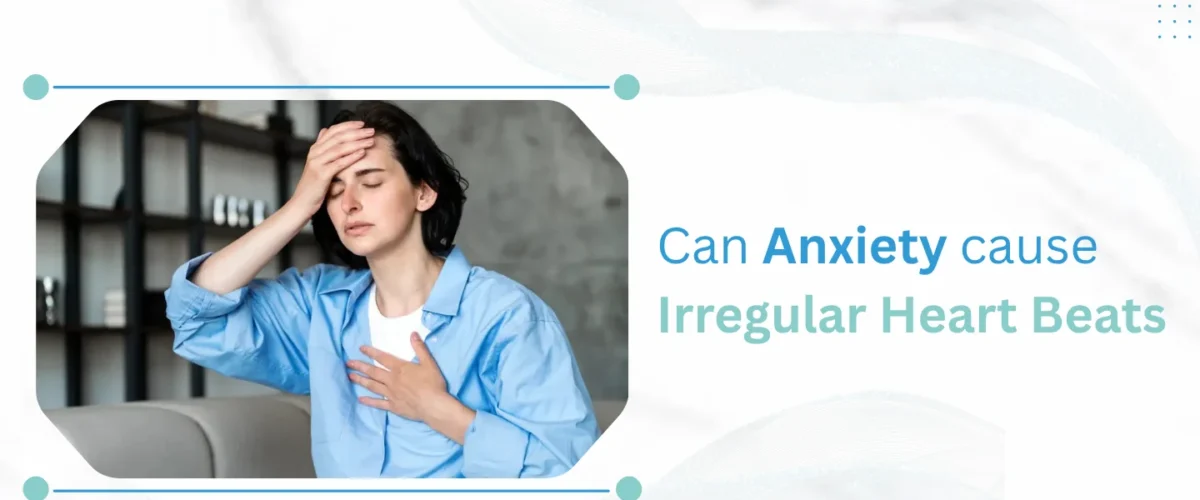
Anxiety Cause Irregular Heartbeats

Can Anxiety Cause Irregular Heartbeats?

Your heart does something strange. It flutters. It pounds. Either it skips or races so rapidly that you halt what you’re doing and press a palm against your heart.
And this is where the second wave of panic happens: Is something wrong with my heart? But for most people, the answer is definitely a no.
However, anxiety is changing the way your body acts, and knowing what that means makes it much more understandable.
Let’s break it down honestly.

How Anxiety Affects Your Body

Your fight-or-flight response gets flipped on when your brain detects a threat, whether the danger is real or imagined.
This is why your adrenal glands emit adrenaline into your system. Your breathing speeds up. Your muscles tighten. And your heart? This is your cue to pump harder and faster – fast-tracking blood flow to your extremities.
This is where the correlation of heart rate and anxiety becomes directly linked.
The adrenaline that has you feeling jittery also sends your heart racing. It isn’t imaginary, and it certainly isn’t a coincidence. It’s the way your nervous system was designed to operate.
In modern life, however, the danger is not of a physical nature. But you have a tough conversation to have, a deadline that is fast approaching, and an audience waiting.
Your heart doesn’t realize the difference. No matter what, it replies the same.

Can Anxiety Cause Irregular Heartbeats?

Yes, it can. “Can anxiety cause irregular heartbeats?” is one of the most Google-searched questions pertaining to anxiety, for which there is rather a simple answer.
Anxiety triggers your sympathetic nervous system and stops the regular electrical signal that causes your heart to beat. This occurs to create what are known as premature beats, where the heart actually constricts just a tiny bit out of timing.
It is the sound many people use to describe a flip, a thud, or a temporary stop and then an assertive beat. These are usually either premature atrial or ventricular contractions in medical terms.
They are actually more common than we realize, and in otherwise healthy individuals, usually not harmful.
The context (of them) is what makes them alarming. If you are anxious, then noticing something different in your chest is all the more cause to fear.

Does Anxiety Raise Heart Rate? By How Much?

Does anxiety raise heart rate? Yes. Every single time the sympathetic nervous system is activated by anxiety, it raises it.
Resting heart rates in most adults range from 60 to 100 beats per minute. That number can easily rise to over 100 during an anxiety episode.
However, at the time of a complete panic attack, the heart rate surged between 110 and 180 beats per minute. It strikes out of nowhere, it feels horrible and often compounds the panic by feeling like what people think a heart attack would feel like.
Can anxiety increase heart rate continuously for so long, not just for a moment in time?
Chronic anxiety is the condition of people who walk around with a heart rate well above what it would be if their fight-or-flight mechanism were not kicking in all day long.

Anxiety and Heart Palpitations

When it comes to anxiety and heart palpitations, we don’t all use the same words. Others get a quick fluttering in the chest. Others feel it thumping so hard that their throat vibrates. For some, the heart rate catches and lingers, then jerks back to life. While some sense it flutter, hesitate, then slam.
And also, can anxiety cause palpitations when not currently having a panic attack? Absolutely.
Chronic, low-grade anxiety creates palpitations during normal activities. Sitting down behind a desk, watching television, or lying on the bed waiting to sleep. This can happen without you being in full panic mode.
There’s also what some would call a nervous heart rate, that baseline heightened state that accompanies generalized anxiety. Your heart isn’t racing. However, it is going too fast and working too hard during rest. That sustained elevation takes a toll on the cardiovascular system over time.

How to Know If It Is Anxiety or Not

Here is where you do not want to fast forward, and (rightly) so. Not every irregular heartbeat is anxiety-related. Cardiac diseases, thyroid dysfunction, electrolyte abnormalities, and other organic reasons can cause paraplegic equivalent clinical manifestations.
What tends to point toward anxiety instead of a heart problem is the following:

  • The palpitations occur during or after a stressful situation, not in a random place (like driving).
  • They vanish relatively rapidly – ordinarily inside the range of minutes, and particularly once you settle down.
  • You have had a cardiac workup recently, which was normal.
  • At the same time, you also feel other anxiety symptoms: a pounding heart, hyperventilation, sweating, nausea, and a sense of impending doom.
  • The palpitations are not accompanied by chest pain, fainting, or violent vertigo.

Here is why you should step foot in a doctor’s office, sooner rather than later:

  • Exercise-induced palpitations (palpitations that occur when exercising or are physically active).
  • The serious kind – a heartbeat that is blatantly irregular over the course of several minutes, not merely an occasional couple of bizarre beats.
  • Blackouts or pre-blackout episodes are associated with palpitations.
  • Cardiac illness in the family.
  • Palpitations that do not respond at all to anxiety attack-related strategies.

If you are in doubt, check it out. It’s not overkill to rule it out as a cardiac cause. It’s smart. If you have heart palpitations or an arrhythmia and it is deemed non-life-threatening, then this can be useful for managing anxiety, as the next time you experience palpitations, you have something real instead of fearing the void.

Learn How to Prevent Anxiety-Related Palpitations

Here’s how to stop palpitations from anxiety in the moment, now that you’ve confirmed they truly are related to anxiety.

Slow your breathing down

The strongest lever you have is this. Anxiety increases the excessive response where breathing becomes rapid and shallow, thus perpetuating this hyper arousal in the nervous system.
Breathing slowly but consciously such that exhalation extends longer than inhalation, stimulates the parasympathetic nervous system and signals your body that the threat is gone. Breathe in for four counts and out for six or seven. Repeat this for around two to three minutes.

Try the Valsalva maneuver

This sounds technical but this is easy. Hold your nose, close your mouth, and push like you are just about to pick up something heavy. Hold it for 10 to 15 seconds. It stimulates the vagus nerve that, in turn, slows the heart.
We are exposing it to the kind of heart rhythm emergency physicians will use for some types of rapid heart rhythm. Its not a cure all for every type of palpitation, but anxiety-triggered racing works quickly often.

Get cold water on your face

When you splash cold water on your face – or plunge your face into a bowl of icy water if you can get hold of one – it triggers something called the diving reflex. As a result, your heart rate decreases.

Move your body

This one surprises people. So, for example, if you are feeling anxious and sitting still in a state of activation, that is harder on your system than engaging in some gentle movement!
Even a quick five-minute walk allows your adrenaline to go somewhere and burns off the physiological state that is triggering the palpitations.

Name what’s happening

You would think this is too simple to be any concern, but it is. Telling yourself, “this is anxiety, this is my nervous system, and I am not in danger,” breaks the cycle.

Long Term: The Great Patience of Healing the Anxiety, Not Just the Symptoms

It is handy to manage the palpitations in real-time. Guidance: But if anxiety is always on, affecting your heart rate, then the real work starts with addressing the anxiety itself.

What works:

Therapy (specifically cognitive behavioral therapy or CBT) for anxiety disorders is also well-evidenced. It guides people in recognizing and reprogramming thought patterns that maintain the nervous system in a persistently aroused state.
Medication will sometimes lower that baseline anxiety greatly (if they are appropriate for you), which will also lead to the physical symptoms going down, including the heart ones.
This relationship between anxiety and heart rate issues is no short-term issue. This sustained stress on the hypertension also increased your risk factors for chronic anxiety daily from untreated sources. It raises baseline cortisol levels. It maintains blood pressure at just above. It contributes to inflammation. None of these is a disastrous individual outcome, but they add up. Treatment of anxiety is a decision made for your cardiovascular health as well as your mental health.

When To Consult a Mental Health Provider

If those palpitations and racing heart are part of your regular anxiety experience, that’s a direct mental health issue to raise, not just this with a cardiologist.

The clarification of what anxiety you are currently dealing with: panic disorder, generalized anxiety, or other disorders, and what treatment is appropriate.

All this can be obtained through an evaluation.

VEVE HEALTH SERVICES

We do psychiatric evaluations, medication management, and individualized care for anxiety at Veve Health. Local to Gainesville, VA, or via telehealth anywhere you are!

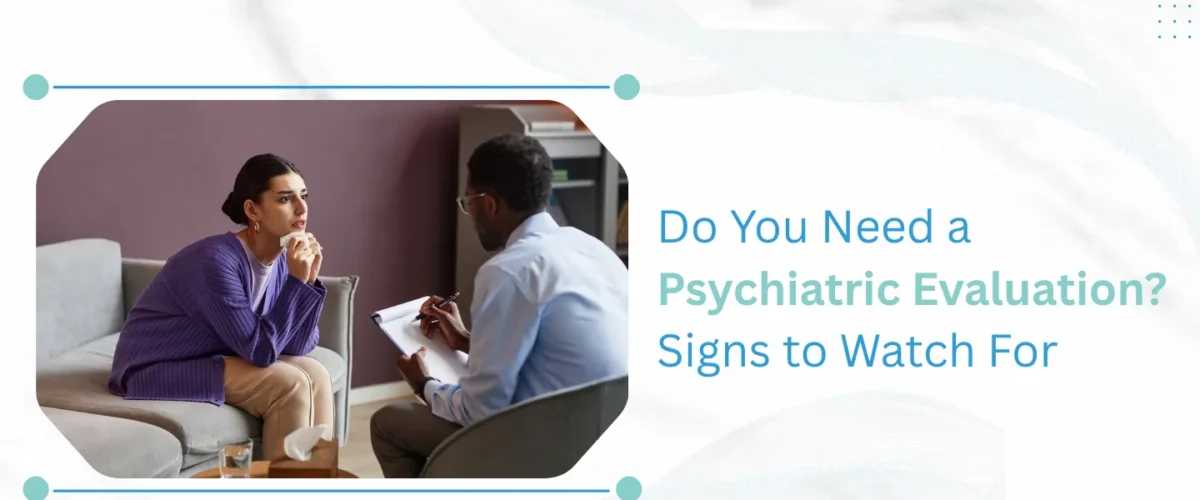
Do You Need a Psychiatric Evaluation

Do You Need a Psychiatric Evaluation? Signs to Watch For

You’re functional. You’re showing up. No one in the workplace would have guessed.
But inwardly something has changed, and you have been coping with it like many of us cope with things: by hoping it will go away, by keeping busy, by telling yourself it is not so bad.
There are times when it does pass. However, occasionally, the not-that-bad turns into the new standard, and you get used to it to such an extent that you forget how much you’ve changed – you no longer feel like yourself.
A mental check is not an option of last resort.
It’s not the thing you do when you’ve completely unraveled.
It is a dialogue with a person whose whole occupation is to know what is going on in your head, give it language, and assist you in determining your next action.

What Actually Happens in an Evaluation

Worth knowing before anything else, because “psychiatric evaluation” carries more weight in the imagination than it does in practice.
You talk. A psychiatrist or psychiatric nurse practitioner asks you about your symptoms, your history, your sleep, your relationships, how you’ve been functioning day to day. They’re not fishing for a diagnosis to hand you. They’re building a picture of you, specifically, so that whatever comes next actually fits.
What comes next is different for everyone. It might be therapy, medication, a referral, a second conversation. Nothing happens without your understanding and input. You are, as ever, in charge of your own care.

Signs Worth Taking Seriously

Your emotional responses have begun to outweigh your control

Not just hard feelings, everyone has those. But feelings that arrive with an intensity that doesn’t match the moment, that hang around longer than makes sense, that seem to have decoupled from actual events. Crying that won’t resolve. Irritability that’s become your resting state. Anxiety that used to visit occasionally and now seems to live with you.
When your inner weather stops tracking with your outer life, that’s information.

The basics have become quietly exhausting

Sleep. Concentration. Surviving a working day. Remaining abreast with those you love. None of it is devastating in itself, but combined, it can be.
The things you once had to do on autopilot now take effort. The things that could once bring you joy seem weirdly two-dimensional.
It is the form of struggling that is the most rationalizable. Stress. Season. Just tired. But after months, it is time to inquire as to the true nature of what is under it.

You’re not sleeping, or you’re sleeping too much and feel nothing for it

A pattern of lying awake late at night, or waking at 4 and that’s it, or sleeping nine hours and dragging yourself through the day anyway. Sleep and mental health are so tightly connected that disrupted sleep is often one of the first places a psychiatric issue surfaces, and one of the last places people think to bring up with a provider.

Your thoughts are going somewhere you don’t want them to go

Intrusive thoughts. Impossibility to calm down racing thoughts. An ongoing low-level anxiety that is not necessarily attached to anything objective.
Or darker ground: thoughts of not wanting to be here, even passing thoughts, even thoughts you would call transient or crazy. Those should be brought out loud to be heard by someone who is trained to hear them.

You’ve been self-medicating, even mildly

  • A little more wine than usual.
  • Eating in a way that feels more like numbing than hunger.
  • Staying on your phone for hours because it quiets something.

All of these things are worth being honest about, with a provider and with yourself, because what they’re quieting usually has a name.

There’s something you’ve never really put down

Trauma is patient. It can lie dormant over the years and re-emerge as anxiety that you can never associate with a single thing, emotional numbness, a relationship cycle that refuses to break, or a short fuse that catches you off guard as much as anyone.
You don’t have to have survived something extreme. A difficult childhood, a painful relationship, a loss that never got its proper grief. It all counts. And an evaluation is often the first place someone finally says it out loud.

You’ve been doing all the right things and nothing is shifting

Treatment, vitamins, reducing alcohol consumption, attempting to get more sleep, and increasing exercise. All genuinely good. However, when you have been doing it a long time, and the needle is not moving, that is valuable information as well.
It implies that maybe there is something wrong physiologically, something that can be determined by a psychiatric examination.

If You’re Worried About Someone Else

Signs in another person may be more visible than your own signs. Quitting some things they were fond of. A flatness where there used to be life. Even joking remarks about being a burden or not seeing the point. Any mention, however casual, of not wanting to be here.
You don’t need a clinical language for the conversation. You can just ask how they’re doing. And then be quiet enough to hear the real answer.

If Things Feel Urgent Right Now

If you or someone you know is having thoughts of suicide or self-harm, please call or text 988 to reach the Suicide and Crisis Lifeline. You can also go to your nearest emergency room. A psychiatric evaluation can wait for the right appointment. A crisis cannot.

On Whether You’re “Bad Enough” to Deserve Help

Almost everyone asks this question. Almost everyone decides, at least once, that they’re not. And waits longer than they need to.
There is no threshold. No severity requirement. If something has been affecting the quality of your daily life, your sleep, your relationships, your relationship with yourself, that’s enough. You don’t need a breakdown to justify a conversation.
The psychiatrist Catherine Birndorf, who has written on this for years, puts it simply: it’s never too early to seek help. The version of yourself that finally makes that call is not weak. She’s just paying attention.

Get Professional Care Today

At Veve Health, our psychiatric nurse practitioner takes the kind of time with patients that most practices don’t.
Just a careful, unhurried conversation aimed at actually understanding what’s going on, so that whatever comes next is genuinely useful.

Book your appointment at Veve Health.