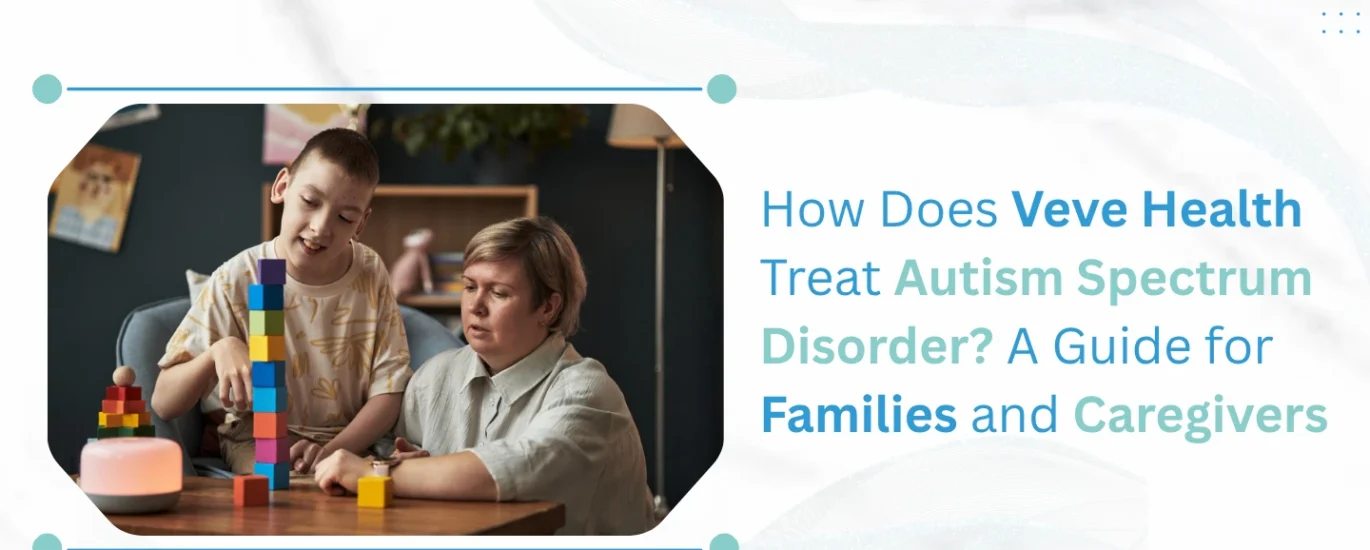
Finding help for a loved one with Autism Spectrum Disorder (ASD) can feel hard. Families often want the best care and support.
At Veve Health Services, we work with children, teens and adults with autism. We also help their families. We focus on daily life skills, communication and feeling better in everyday life.
This guide explains how Veve Health treats autism spectrum disorder and how we support individuals and families at every step.
Understanding Autism Spectrum Disorder (ASD)
ASD is a developmental condition that manifests differently in individuals. Some excel at language but struggle socially, while others require extra support with communication, education, or daily tasks.
Common signs of autism may include:
- Difficulty with social communication
- Repetitive behaviors or movements
- Intense focus on specific interests
- Sensitivity to sounds, lights, textures, or odors
- Preference for routines and predictability
- Challenges in emotional regulation
- Variations in learning and information processing
Everyone with autism is unique.
How Does Veve Health Treat Autism Spectrum Disorder?
At Veve Health, we do not use one fixed treatment plan for everyone. Instead, we focus on each person’s needs, strengths and goals.
Our main goal is to help people live a better and happier life. We also support families during the whole journey.
Comprehensive Evaluation and Diagnosis
A clear and careful evaluation is very important for autism care. Early understanding helps guide the right support.
Our evaluation process includes:
- Detailed medical and developmental history
- Review of behavioral concerns
- Assessment of communication and social skills
- Input from parents or caregivers
- Evaluation of emotional and mental health needs
- Screening for other related conditions
We consider the whole person, beyond just the signs of autism, to build a care plan that fits the individual.
Medication Management When Needed
Medication does not treat autism itself. However, it can help manage related symptoms that affect daily life.
Some individuals may experience:
- Anxiety
- Depression
- Hyperactivity
- Difficulty focusing
- Mood changes
- Irritability
- Sleep problems
At Veve Health, our providers carefully decide if medication is helpful. If it is needed, we monitor progress closely.
Our approach includes:
- Careful selection of medication
- Regular follow-up visits
- Monitoring benefits and side effects
- Adjusting treatment when needed
We aim to support comfort, safety and balance in daily life.
Psychoeducation for Individuals and Families
Knowledge improves families’ feeling confident and ready.
Psychoeducation services at Veve Health are designed to deliver practical information relating to autism and mental health. We help to inform families about behaviors, emotions, communication styles and daily challenges.
During psychoeducation sessions, we discuss:
- Understanding autism characteristics
- Building healthy routines
- Managing stress and anxiety
- Emotional regulation strategies
- Improving communication
- Supporting independence
- Strengthening family relationships
When families understand autism, they can support at home, school and in the community.
Family-Centered Care Approach
Autism affects not only the individual but the entire family system.
At Veve Health, we actively involve families in the care process by helping them:
- Understand changing needs and behavior patterns
- Develop structured and supportive home environments
- Respond effectively during behavioral or emotional challenges
- Build consistency between home and clinical strategies
- Recognize progress and developmental milestones
Family participation is essential for long-term success.
Development of Daily Living and Life Skills
A major focus of autism care is improving functional independence and daily life skills.
At Veve Health, our programs support development in areas such as:
- Emotional awareness and regulation
- Social interaction skills
- Communication and expression
- Personal care and daily routines
- Academic or workplace functioning
- Problem-solving and adaptability
Every achievement matters. Small improvements lead to long-term progress.
What to Expect During the First Visit?
Starting autism care can feel overwhelming, but we work to ensure the journey is friendly and reassuring.
During the initial consultation, at Veve Health, we typically:
- Listen to concerns and goals from families
- Review developmental and medical history
- Conduct an initial clinical assessment
- Discuss observed challenges and strengths
- Answer questions in detail
- Explain possible care options
- Develop a preliminary individualized plan
Follow-up sessions are scheduled based on clinical need and treatment goals.
The Future of Autism Care at Veve Health
Autism care is evolving with advancements in digital health, telemedicine and personalized medicine.
At Veve Health, we are integrating:
- Telehealth consultations for easier access
- Personalized treatment tracking
- Data-informed care planning
- Family education through digital tools
Our goal is to make autism care more accessible, consistent and outcome-focused.
Conclusion
Autism Spectrum Disorder requires long-term, structured and individualized support rather than a one-size-fits-all solution.
We are at Veve Health committed to optimizing a patient’s quality of life based on clinical assessment, individualized treatment planning, family education and continued clinical assessment.
Call Veve Health and let a trusted team help you create a better future.
FAQs
Does Veve Health cure autism?
No. Autism is lifelong. But support can help a lot.
Can families participate in treatment?
Yes. Family involvement is a core part of Veve healthcare model and is strongly encouraged.