Veve Health Treat Autism Spectrum Disorder

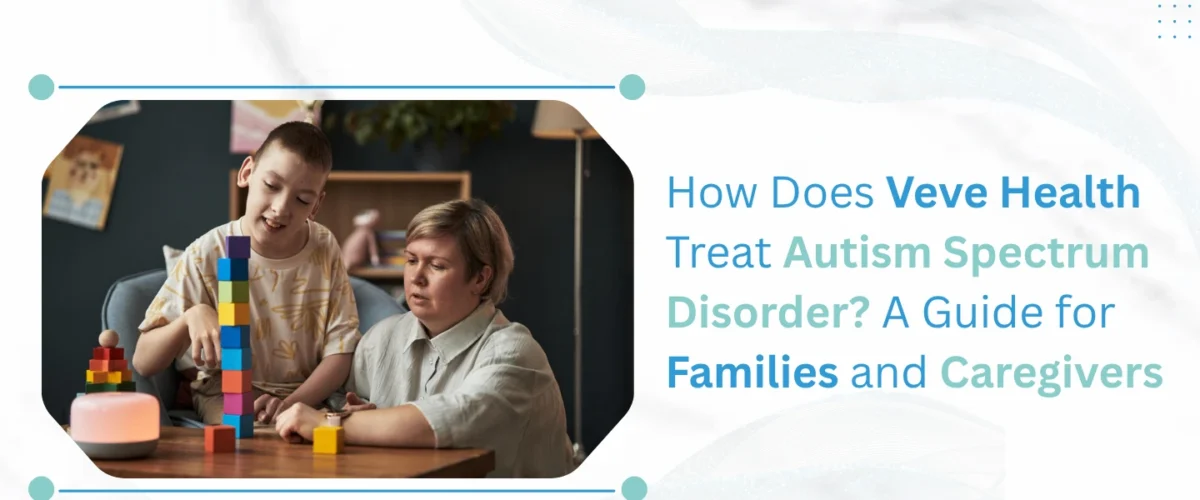
How Does Veve Health Treat Autism Spectrum Disorder? A Guide for Families and Caregivers

Finding help for a loved one with Autism Spectrum Disorder (ASD) can feel hard. Families often want the best care and support.
At Veve Health Services, we work with children, teens and adults with autism. We also help their families. We focus on daily life skills, communication and feeling better in everyday life.
This guide explains how Veve Health treats autism spectrum disorder and how we support individuals and families at every step.

Understanding Autism Spectrum Disorder (ASD)

ASD is a developmental condition that manifests differently in individuals. Some excel at language but struggle socially, while others require extra support with communication, education, or daily tasks.
Common signs of autism may include:

  • Difficulty with social communication
  • Repetitive behaviors or movements
  • Intense focus on specific interests
  • Sensitivity to sounds, lights, textures, or odors
  • Preference for routines and predictability
  • Challenges in emotional regulation
  • Variations in learning and information processing

Everyone with autism is unique.

How Does Veve Health Treat Autism Spectrum Disorder?

At Veve Health, we do not use one fixed treatment plan for everyone. Instead, we focus on each person’s needs, strengths and goals.
Our main goal is to help people live a better and happier life. We also support families during the whole journey.

Comprehensive Evaluation and Diagnosis

A clear and careful evaluation is very important for autism care. Early understanding helps guide the right support.
Our evaluation process includes:

  • Detailed medical and developmental history
  • Review of behavioral concerns
  • Assessment of communication and social skills
  • Input from parents or caregivers
  • Evaluation of emotional and mental health needs
  • Screening for other related conditions

We consider the whole person, beyond just the signs of autism, to build a care plan that fits the individual.

Medication Management When Needed

Medication does not treat autism itself. However, it can help manage related symptoms that affect daily life.
Some individuals may experience:

  • Anxiety
  • Depression
  • Hyperactivity
  • Difficulty focusing
  • Mood changes
  • Irritability
  • Sleep problems

At Veve Health, our providers carefully decide if medication is helpful. If it is needed, we monitor progress closely.
Our approach includes:

  • Careful selection of medication
  • Regular follow-up visits
  • Monitoring benefits and side effects
  • Adjusting treatment when needed

We aim to support comfort, safety and balance in daily life.

Psychoeducation for Individuals and Families

Knowledge improves families’ feeling confident and ready.
Psychoeducation services at Veve Health are designed to deliver practical information relating to autism and mental health. We help to inform families about behaviors, emotions, communication styles and daily challenges.
During psychoeducation sessions, we discuss:

  • Understanding autism characteristics
  • Building healthy routines
  • Managing stress and anxiety
  • Emotional regulation strategies
  • Improving communication
  • Supporting independence
  • Strengthening family relationships

When families understand autism, they can support at home, school and in the community.

Family-Centered Care Approach

Autism affects not only the individual but the entire family system.
At Veve Health, we actively involve families in the care process by helping them:

  • Understand changing needs and behavior patterns
  • Develop structured and supportive home environments
  • Respond effectively during behavioral or emotional challenges
  • Build consistency between home and clinical strategies
  • Recognize progress and developmental milestones

Family participation is essential for long-term success.

Development of Daily Living and Life Skills

A major focus of autism care is improving functional independence and daily life skills.
At Veve Health, our programs support development in areas such as:

  • Emotional awareness and regulation
  • Social interaction skills
  • Communication and expression
  • Personal care and daily routines
  • Academic or workplace functioning
  • Problem-solving and adaptability

Every achievement matters. Small improvements lead to long-term progress.

What to Expect During the First Visit?

Starting autism care can feel overwhelming, but we work to ensure the journey is friendly and reassuring.
During the initial consultation, at Veve Health, we typically:

  • Listen to concerns and goals from families
  • Review developmental and medical history
  • Conduct an initial clinical assessment
  • Discuss observed challenges and strengths
  • Answer questions in detail
  • Explain possible care options
  • Develop a preliminary individualized plan

Follow-up sessions are scheduled based on clinical need and treatment goals.

The Future of Autism Care at Veve Health

Autism care is evolving with advancements in digital health, telemedicine and personalized medicine.
At Veve Health, we are integrating:

  • Telehealth consultations for easier access
  • Personalized treatment tracking
  • Data-informed care planning
  • Family education through digital tools

Our goal is to make autism care more accessible, consistent and outcome-focused.

Conclusion

Autism Spectrum Disorder requires long-term, structured and individualized support rather than a one-size-fits-all solution.
We are at Veve Health committed to optimizing a patient’s quality of life based on clinical assessment, individualized treatment planning, family education and continued clinical assessment.
Call Veve Health and let a trusted team help you create a better future.

FAQs

Does Veve Health cure autism?

No. Autism is lifelong. But support can help a lot.

Can families participate in treatment?

Yes. Family involvement is a core part of Veve healthcare model and is strongly encouraged.
OCD Make You Paranoid

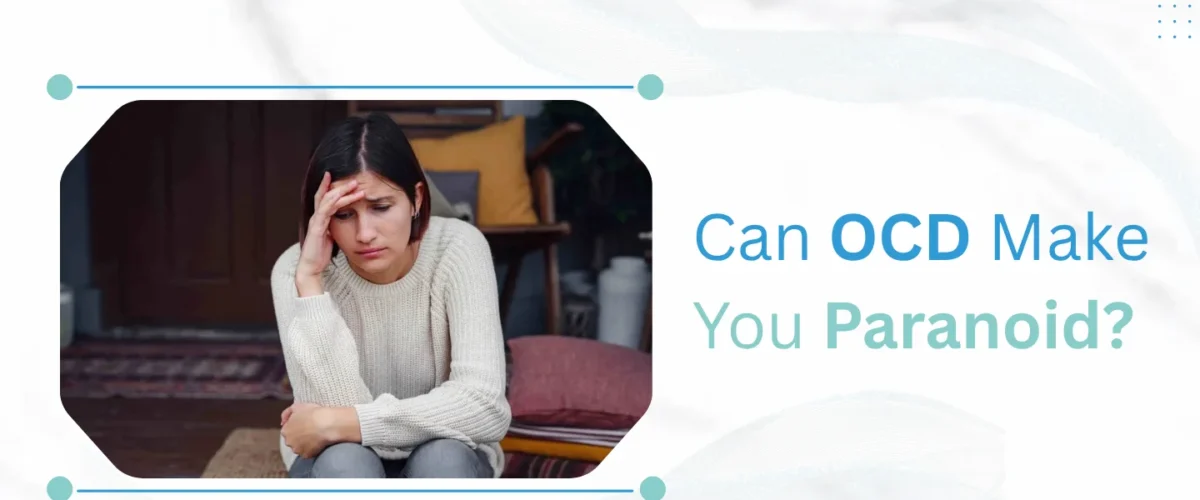
Can OCD Make You Paranoid?

It is incredibly exhausting when your own mind turns against you. You are having your day just now when a scary thought comes out of nowhere. That someone is trying to get you, or that some insidious threat is lurking just around the corner. But with OCD, your brain is already accustomed to being on high alert. But when your intrusive thoughts become a taste, it makes you ask the really scary question:Am I losing my grip on reality? Does OCD make you paranoid?
If you are trying to untangle the connection between paranoia and ocd, please know you are not alone. It is a heavy thing to carry. Let’s talk about how these two mental states actually overlap, what is happening to your nervous system, and how to find your footing again.

The Overlap: Understanding OCD and Paranoia

To understand why your brain is doing this, look at how a hyperactive mind operates. OCD thrives on absolute doubt and a frantic need for safety. Paranoia is a pervasive mistrust of the world or the people in it.
When you sit up at night wondering, can ocd cause paranoia, the answer has some nuance to it. True clinical paranoia – the kind linked to psychosis – is different because a person completely believes the delusion and loses all insight. But ocd and paranoia frequently look like identical twins because OCD can create an experience so intense that it mimics paranoia completely.
In the mental health community, people often call this manifestation paranoid ocd. It’s the exact space where your standard obsessions start feeling like genuine suspicion. You aren’t just worried you forgot to lock the front door; you become consumed by the idea that someone is actively lurking outside to compromise your safety.

How OCD Mimics Paranoia (And Vice Versa)

If you are trying to figure out does ocd cause paranoia, look at how an obsession grows. OCD takes a tiny “what if” and treats it like an absolute guarantee of danger.
Here is how that hyper-vigilance blurs the lines:

  • Hyper-Analyzing Hidden Motives: A standard intrusive thought might tell you that a friend is mad at you. A paranoid ocd thought takes it a step further: They are plotting against me. Because OCD demands absolute certainty, you might find yourself dissecting every text message, sideways glance, or email for “proof,” creating a brutal loop of suspicion.
  • The Safety Trap: Actual paranoia is that the world is objectively trying to harm you. OCD will say the world is a dangerous place, and that it is literally your job to prevent a disaster from happening. When it is your entire responsibility to safeguard everything, paranoia seems like a normal defensive survival response.
  • Fear of Harm or Contamination: For a lot of people, the connection between paranoia and ocdcan ocd cause paranoia shows up in how they protect their physical space. It shifts from a fear of standard germs to a terrifying suspicion that someone is deliberately trying to poison their food or contaminate their home!

When these thoughts are peaking, it feels impossible to separate your reality from your fear. You find yourself completely trapped in a cycle, asking: does ocd make you paranoid, or are you actually unsafe?

Getting out of the Loop

This state of alertness is exhausting and saps your energy. It steals your sleep, peace, relationships, and ability to feel safe in your own body. The truth is that being aware of the strong connection between paranoia and ocd is exactly what we need to do to start getting better.
When your mind spins an apocalyptic narrative about the world, you certainly don’t have to swallow it whole. Now, this is how we move stuff.

  • Put a name to it: Name the suspicious thought when it arises. Rather than follow this rabbit hole down the path of, “Why does everyone look at me like that?” If your OCD is very loud right now, try saying to yourself: “My OCD is really, really loud right now and wants me to feel in danger.”
  • Calm the body first: Because your nervous system thinks the threat is real, logic won’t work right away. Focus on physical grounding first – deep, slow belly breaths, putting your feet flat on the floor, and letting the panic peak and wash over you without fighting it.
  • Dropping the search for proof: The fix for the connection between paranoia and ocd isn’t finding 100% proof that you are safe; it’s learning to sit comfortably with the fact that we can never have absolute certainty about what other people are thinking.

Support at VeVe Health

You don’t have to white-knuckle and fight through a fog-soaked hyper-vigilant mind. We know how tired you are when your mind feels like the most dangerous place to live inside. We practice whole-person modalities that celebrate who you are – acknowledging your unique nervous system, the life you live, and caring about your mental well-being with empathy against altruistic clinical checklists or ratios.
No matter if you’re dealing with thoughts about classic obsessions, running on empty from deep burnout, or facing the scary truth of paranoid ocd we want to create a calm, safe space for you to open it all up.
Right now, your mind may be a very convincing survival game, but you are not broken and must not figure it out alone.
Connect with us at darkcyan-termite-956227.hostingersite.com/ to schedule a supportive, human conversation. Let’s map out a path to a much quieter mind.

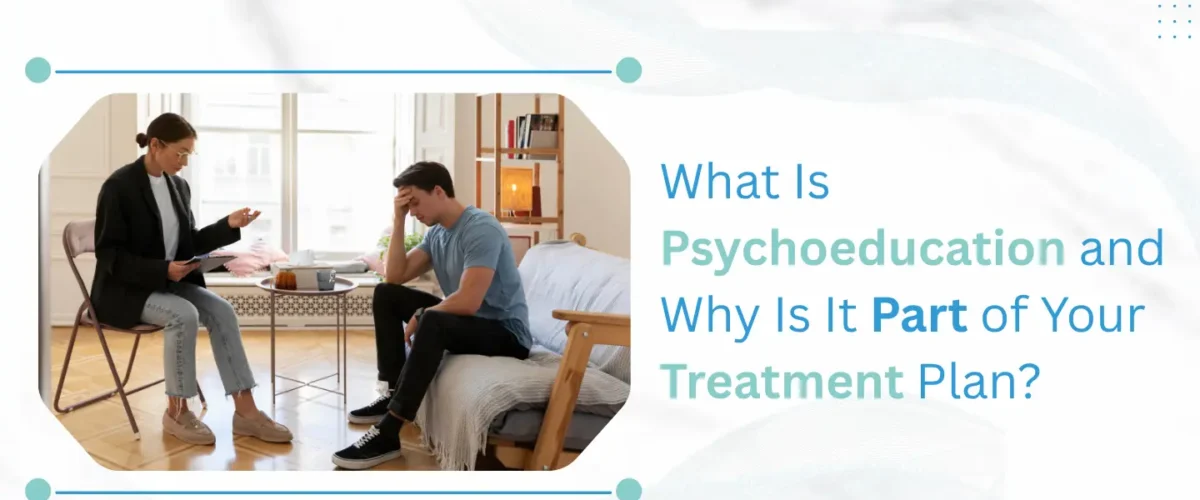
Psychoeducation and Why Is It Part of Your Treatment Plan

What Is Psychoeducation and Why Is It Part of Your Treatment Plan?

You know that feeling when someone puts a name to something you have been holding onto for a long time, and something in you settles? So that is exactly what psychoeducation is meant to do. Not as a concept on paper. As an actual occurrence that takes place in the room with your provider.
You have it as part of your treatment plan because knowing what is going on in your body, really getting it, changes the way you move through it. That sounds like something that should be obvious. It usually is not.

Knowing About It and Actually Getting It Are Different Things

The vast majority of people entering care already have knowledge about their diagnosis. They have googled it. They understand that cortisol and the nervous system are involved in anxiety. They are aware that depression is not merely sorrowful. They understand that ADHD is not truly a concentration issue.
This knowledge means almost nothing when you find yourself in the thick of it.
What actually helps is knowing your version of it: what usually starts it before you even notice, what it builds out of, where the opening is to do something else. Nothing on any webpage will teach you that version of understanding. It is stitched together, a bit at a time, from your real past.
That is psychoeducation. Not a handout. Not a lecture. A real, ongoing conversation about what your mind is doing and why.

Why It Makes the Rest of Your Treatment Work Better

Therapy lands differently when you understand why your therapist keeps pulling on a particular thread. Medication makes more sense when you know what it does in your brain and why it was chosen for how you specifically present, not for the average person with your diagnosis on a clinical chart.
And you are more likely to stay on something long enough for it to work when you know what working is supposed to feel like and roughly when to expect it. That last part keeps more people from stopping medication prematurely than almost anything else.
This is not about being a compliant patient. It is about having enough context to be a real participant in your own care. The people who tend to do best in treatment are not the ones with the least complicated situations. They are the ones who understand what is happening well enough to work with it.

What It Actually Looks Like

In your sessions

Psychoeducation doesn’t always present itself. Sometimes, you see your provider discussing with you what your diagnosis means, why it exists, how it exists, and the research on how people get better from your diagnosis. Maybe it is a conversation about your medication: why this one, how it works, what to be aware of, and when something is worth calling about.
Other times it is a quieter experience: sensing what the beginning of a difficult week feels like for you before it turns into a difficult week. That one is much more helpful than people anticipate on first hearing it.
If it ever seems like a lecture, speak up. It’s not meant to feel like that.

For the people around you

When you want it to, psychoeducation can be extended toward your family or partner. Indeed, most of the people who are in touch with someone undergoing treatment are not unsupportive. People are perplexed, and each can unknowingly complicate the situation. When a provider makes sense of what you are going through, in terms that resonate with someone outside it (not living through it), things begin to change.

What It Is Not

It is not therapy. It does not replace the deeper work of processing what happened to you or understanding the patterns beneath the surface. It is also not a substitute for medication when medication is part of your plan.
Think of it as the thing that makes everything else less opaque. Without some version of it, treatment can feel like you are following instructions for something you do not fully understand. With it, you start to become someone who knows what they are doing and why.

At Veve Health, Understanding Is Part of the Care

Veronique Kom, PMHNP and her team at Veve Health Services do not view psychoeducation as a box to be checked. If you have never really had an explanation of what is going on with you or if the explanation you got did not really land, that might be a thing to look into.
Psychiatric assessment, medication management, psychotherapy and telepsychiatry are in-office at Gainesville and Fairfax, VA, as well as via telehealth throughout Virginia and Maryland)

Book at darkcyan-termite-956227.hostingersite.com/

Email: frontdesk@vevehealth.com

7150 Heritage Village Plaza, Gainesville, VA

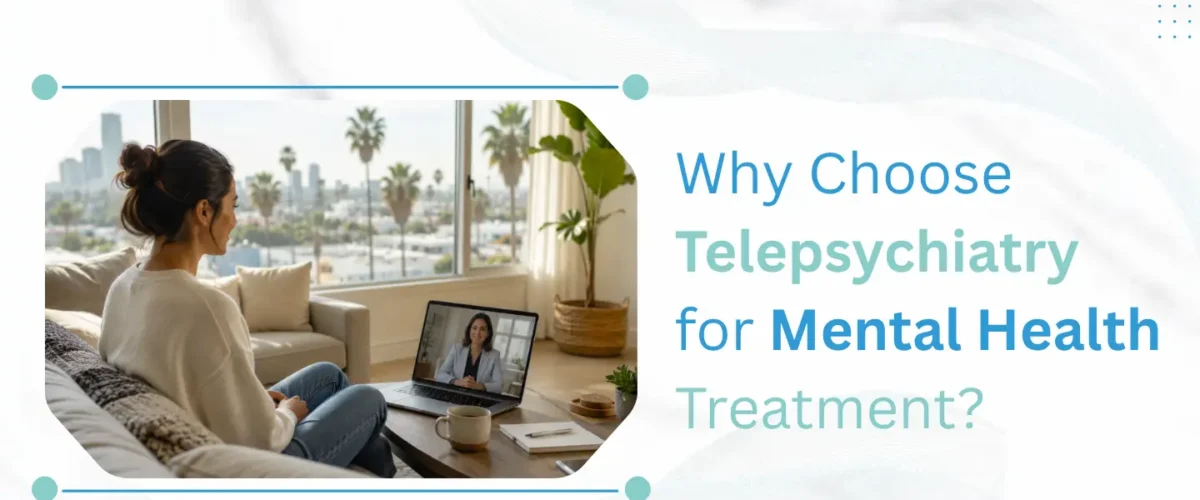
Telepsychiatry for Mental Health Treatment

Why Choose Telepsychiatry for Mental Health Treatment?

There is one type of procrastination around mental health care.
The one where every week your brain runs the same calculations: drive to the office, time in waiting room, pay for parking, get back for whatever is next. And then you say, maybe, when things are back to normal.
Telepsychiatry didn’t become common because it was a trend. It became common because it removed the specific set of logistical barriers that, for many people, were the actual barrier to getting help.

What Telepsychiatry Actually Is

A psychiatric appointment conducted over secure video. Evaluation, diagnosis, medication management, follow-up. The clinical quality is the same. What changes is everything around it.
No waiting room. No commute. No one seeing your car parked outside a mental health office. You can be at home, at your desk between meetings, in your car before pickup. Wherever you can get a quiet thirty minutes, that’s where the appointment happens.

Why the Setting Matters More Than You’d Think

Something happens in a clinical waiting room that doesn’t happen anywhere else. You sit under fluorescent lights with strangers, and you wait. For some, that part doesn’t bother them. That room alone is enough to prevent a lot of people, especially those suffering from anxiety.
There is also something worth saying about what happens when you are in your own space during an appointment. You are not performing calm in an unfamiliar environment. You are in your kitchen or your home office, and the conversation tends to feel different because of it. More honest, often. More like you.

The Practical Reality

People who stay consistent with mental health care aren’t necessarily more motivated than those who don’t! They’ve usually just found a format that actually fits their life.
Telepsychiatry tends to work especially really well for:

  • People with demanding schedules who cannot afford to lose a half-day to a single appointment
  • Anyone living in an area where psychiatric providers are limited or far away
  • People who experience anxiety around clinical or medical settings
  • Parents and caregivers who don’t have room in the day to leave for long stretches
  • Anyone who has started treatment before and stopped because the logistics eventually won out

What Stays the Same

The appointment itself. A real provider who has reviewed your history, who is paying attention, who is asking real questions and thinking carefully about what you need. If medication is part of your treatment, the prescription goes to your pharmacy the same way it always has. Follow-up is scheduled the same way.
The therapeutic relationship, the thing that research consistently shows matters most in treatment outcomes, is not diminished by a screen. What determines whether care works is the quality of the person on the other side and whether they are genuinely listening. That has nothing to do with which room you are sitting in.

Who Telepsychiatry Is Especially Right For

Not everyone will prefer it. Some people find in-person care grounding in a specific way, and that is a legitimate preference.
But for a lot of people, telepsychiatry is not a compromise. It is a better fit. The person who has been putting off getting help because the logistics never quite lined up. The one who lives an hour from the nearest provider. The one who can finally make consistent appointments because they no longer require reorganizing the entire day.
Consistent care is what actually moves things forward. Anything that makes it easier to show up consistently is worth taking seriously.

At Veve Health

At Veve Health in Gainesville, Virginia, telepsychiatry is not an add-on. It is central to how care is delivered.
With over twelve years of experience, Veronique Kom offers evidence-based therapeutic strategies for adolescents and adults ages 15 to 65 throughout Virginia and Maryland!
We offer psychiatric evaluations, medication management, psychoeducation, and ongoing support for mental health issues. Every treatment plan is individualized. In-person and telehealth are both available.
If you have been waiting for things to settle down enough to finally make the call, this is that call.

Book an appointment at darkcyan-termite-956227.hostingersite.com/

Email: frontdesk@vevehealth.com
7150 Heritage Village Plaza, Unit 201, Gainesville, VA 20155
Mon–Fri 9am–5pm · Sat–Sun 10am–2pm

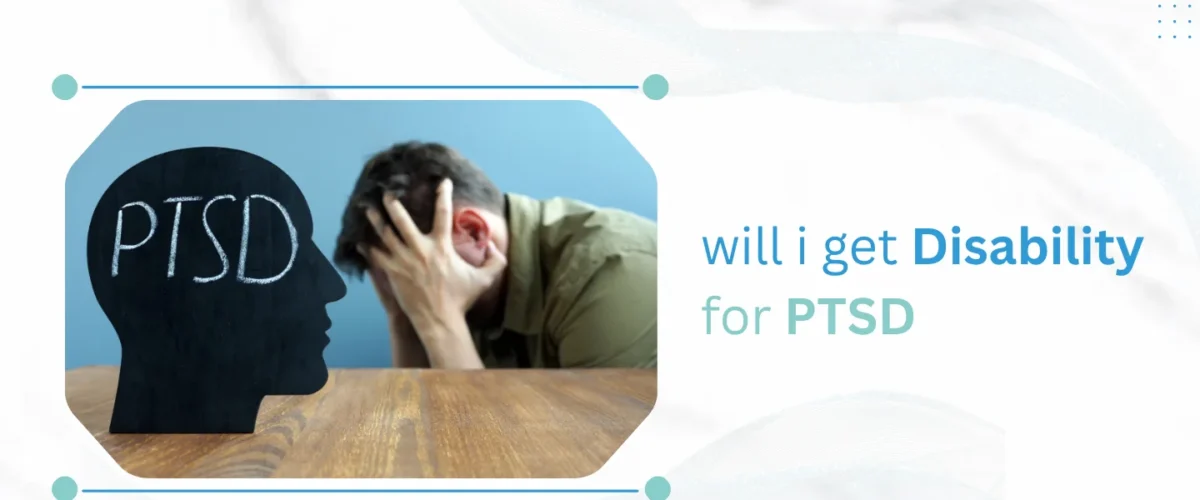
Disability for PTSD

Will I Get Disability for PTSD?

The person asking this question is usually not doing it out of curiosity. Something has shifted. Work became impossible, or nearly so. The job held together for years is starting to come apart. And what they need to know is whether there is a path forward that does not require them to keep performing as if nothing happened.

The short answer is yes, PTSD can qualify you for disability. The longer answer is about what your PTSD looks like on paper, and that part matters more than most people expect.

This is a general post on how the process works. This is not legal advice, and your own records and situation drive the details in a particular claim.

What the SSA Is Actually Looking At

The Social Security Administration evaluates PTSD under its mental health listings. Your records must indicate that you have experienced actual or threatened death, serious injury, and/or violence, and therefore suffer from one or more of these symptoms to be eligible. Those symptoms include:

  • Re-experiencing the trauma involuntarily, as in flashbacks or unwanted memories, or nightmares that repeat over and over.
  • Refraining from anything associated with the event, external or internal.
  • Changes in mood and cognition that appeared after the trauma occurred, which were absent beforehand.
  • Increased reactivity. An overdeveloped startle response, inability to focus, sleep disturbances, irritability with no identifiable trigger.

It should be noted that while it is necessary to document those symptoms, this is not sufficient. The SSA also needs to find that those symptoms are causing significant limitations in your ability to function. In particular, your ability to process and use information, interact with others, keep focused long enough to get things done, and self-manage in a work environment.

A diagnosis on file is not the same as a qualifying claim. The question the SSA is really asking is whether this condition prevents you from holding a job.

If You Are a Veteran

Veterans have a separate pathway through the VA disability rating system, which operates differently from Social Security disability.

The VA rates PTSD on a scale from 0 to 100 percent, based on how much the condition impairs occupational and social functioning. A 50 percent rating reflects serious symptoms that affect work and relationships. A 70 percent rating indicates symptoms severe enough to substantially limit daily life. A 100 percent rating is reserved for total impairment.

Veterans can pursue both VA disability and Social Security disability simultaneously. They are separate systems with different criteria. An approval from one does not guarantee approval from the other, and a VA rating alone does not automatically satisfy SSA requirements.

At Veve Health in Gainesville, Virginia

Veve Health provides psychiatric evaluations, medication management, psychoeducation, and telepsychiatry for PTSD and a range of other mental health conditions. The practice is led by Veronique Kom, APRN, PMHNP-BC, with over twelve years of healthcare experience and a treatment approach that is individualized to each patient’s actual situation, not a template.

Whether you are newly diagnosed, have been living with PTSD for years, or are somewhere in between and trying to understand what support you need going forward, then an evaluation is the right place to start.

Proper care starts with one appointment. Reach out to us today.

Book an appointment on our website at darkcyan-termite-956227.hostingersite.com/

Phone: +1 (888) 407-8533

If you want, you can email us at frontdesk@vevehealth.com  

7150 Heritage Village Plaza, Unit 201, Gainesville, VA 20155 Monday to Friday 9:00 AM to 5:00 PM, Saturday to Sunday 10:00 AM to 2:00 PM