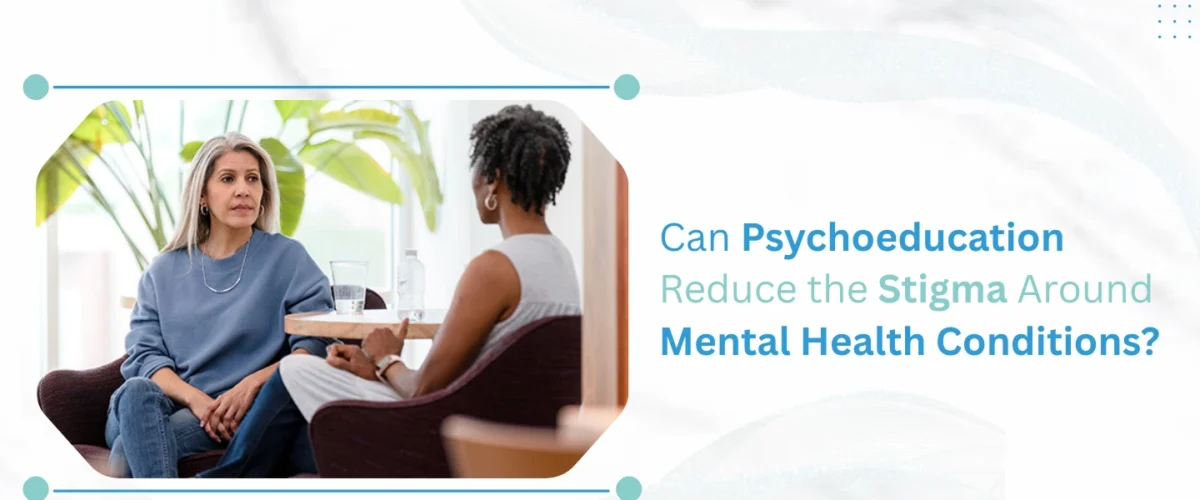
Can Psychoeducation Reduce the Stigma Around Mental Health Conditions

Can Psychoeducation Reduce the Stigma Around Mental Health Conditions?

Mental health is a big part of how we feel, think and act every day. Yet, many people feel afraid to speak up when they struggle. They worry that others will judge them or treat them differently. This unfair judgment is called stigma.
Stigma makes people feel ashamed. It stops them from getting the care they need to feel better.
Learning about mental health can change this story. One special kind of learning is called psychoeducation.
At Veve Health Services LLC, psychoeducation is an important part of the care we provide. We use it to help people turn confusion into clarity. When people have clear facts, they may feel less afraid and more ready to get help.
So, can psychoeducation reduce the stigma around mental health conditions? Let’s explore.

What Is Psychoeducation?

Psychoeducation is just a big word for learning about your mind.
Consider this: When you get a physical disease, such as a cold, you discover how medication and rest aid in the healing process. Psychoeducation is similar, but it focuses on your brain and emotions.
During a session, a care provider explains:

  • What a diagnosis really means
  • How symptoms affect your daily habits
  • Why your brain responds to stress in certain ways
  • Which treatments, like talk therapy or medicine, can help you recover

This isn’t a tough school test. It’s a relaxed, friendly chat where you can ask any question.

How Stigma Harms People

Stigma comes from a lack of true facts. Previously, people thought that problems with their mental health were a personal failing. Some believed you could simply shake off sadness or worry with enough effort.
These incorrect ideas create two main types of stigma:

  1. Public Stigma

This happens when society views people with mental health conditions negatively.

  • Self-Stigma

This happens when a person starts to believe those bad ideas about themselves. They may feel broken, guilty, or hopeless.
Stigma builds a thick wall between a person and the help they deserve. It causes people to hide their feelings. They may attempt to support themselves and their heavy loads alone out of fear of losing a job, friends, and family.

Can Psychoeducation Reduce the Stigma Around Mental Health Conditions?

Yes, it can. It provides basic facts about brain function and emotions. When we replace myths with clear information reduces fear.
Psychoeducation fights stigma in several key ways.

Moving from Personal Failure to Health Facts

When you’re uncertain about your feelings, it’s simple to hold yourself responsible. Psychoeducation reveals that anxiety, depression and ADHD are real health conditions. They are linked to genetics, environment and brain chemistry.
When you see that a mental health condition is a physical response in the body, the guilt disappears. You see that you are not a weak person. You are simply a human experiencing a health challenge that can be managed.

Giving Families Real Understanding

Stigma does not just affect the person who feels unwell. It also affects their loved ones. Family members might feel confused or angry when a loved one behaves differently.
Families involved in psychoeducation understand their loved one’s behavior. They learn that panic attacks or low mood are not intentional acts to annoy them. This shift turns confusion into care and creates a safe, gentle home.

Teaching Useful Coping Skills

Feeling out of control makes mental health conditions seem scary. Psychoeducation removes that fear by handing you practical tools to use every single day. You learn how to:

  • Spot your personal triggers
  • Simple breathing exercises to calm a racing heart
  • Rest, sleep and food affect your daily mood

When you know how to handle your symptoms, you feel strong and capable again.

Bringing Clear Knowledge into Daily Life

Learning about your mind is the first step, but putting that knowledge to work is what creates lasting change. Here is how people use psychoeducation to make life better:

  • Better Words to Speak: You learn simple words to explain your feelings to your doctor, boss, or friends.
  • Early Action: You learn to notice small signs that your stress is rising so you can rest before a full burnout happens.
  • Sticking to Care: You learn how your medicine or therapy works, which helps you stay on track with your care plan.

How We Help You at Veve Health Services LLC

At Veve Health Services LLC, we treat you as a whole person, not just a list of symptoms. We care for teenagers and adults aged 15 to 65 years old. Life can throw heavy challenges your way, such as:

  • School stress
  • Tough career pressures

Our team combines psychoeducation with other treatments, including:

  • Medication management
  • Psychotherapy

We create an individualized plan for each person. We meet with clients in person at our comfortable offices in Gainesville, Virginia and Rockville, Maryland.
We also offer secure online telepsychiatry visits so you can receive care right from your home.
We build a custom care plan that honors your unique goals and personal strengths. We answer all of your questions with total honesty, kindness and deep respect.

Final Thoughts

So, can psychoeducation reduce the stigma around mental health conditions? The answer is a clear yes.
When we replace misunderstanding with simple facts, stigma loses its power. People stop feeling ashamed of their feelings. Families learn how to offer true support. Communities become safer, kinder places for everyone.
It takes courage and it is a good option to ask for help. You never walk this route entirely alone.
Contact the friendly front desk team at Veve Health Services LLC today. Start your journey toward clarity, strength and true healing.

FAQs

Who can benefit from psychoeducation?

Anyone can benefit. People with mental health conditions benefit the most. But family members and friends can also benefit. Understanding mental health fosters support. Veve Health Services LLC serves ages 15 to 65.

Is psychoeducation the same as therapy?

No, but they work together. Therapy helps you process your feelings. Psychoeducation helps you understand your condition. Both are vital and often combined at Veve Health Services LLC for a holistic healing approach.

When Strength Means Silence: The Hidden Mental Health Struggles of Men

When Strength Means Silence: The Hidden Mental Health Struggles of Men

“He always seemed fine.”
That’s what people often say—after it’s too late.

Every year, men are nearly four times more likely than women to die by suicide. And yet, they are far less likely to seek help. Behind this disparity is a painful truth: many men are suffering quietly, trapped by outdated ideas of masculinity and a society that still confuses vulnerability with weakness.

The Pressure to “Man Up”

From an early age, boys are taught—sometimes subtly, sometimes directly—that expressing emotion is not “manly.” Crying, seeking help, talking about pain? That’s “soft.” The result is a generation of men who have been conditioned to suppress their mental health struggles until they become unbearable.

This suppression doesn’t make the issues go away—it just hides them. Anxiety, depression, PTSD, addiction, even eating disorders—yes, men experience them too. But often, the signs are missed, misunderstood, or ignored.

🔍 Did you know? According to the CDC, over 75% of suicides in the U.S. are men. And yet, less than half of men with mental health conditions seek professional help.

Not All Pain Looks the Same

Men’s mental health symptoms often present differently. Instead of sadness, they may feel irritable or angry. Instead of admitting to anxiety, they might become distant or turn to alcohol. And when they do speak up, they’re often met with:

  • “Just tough it out.”

  • “What do you have to be depressed about?”

  • “Be a man.”

These responses don’t just fail to help—they make things worse.

Real Story: From Shame to Strength

Marcus, a 42-year-old father of two from Maryland, had a high-pressure job and a picture-perfect life—on the outside. Inside, he was unraveling. “I felt like I was being crushed,” he says. “But I didn’t want to burden anyone. I didn’t want to seem weak.”

It wasn’t until a panic attack landed him in the ER that he finally opened up to his wife—and began therapy. “That first conversation saved my life,” he says. “I didn’t know how much I was carrying until I started letting it out.”

It’s Time for a New Definition of Strength

Strength is not in how much you hide.
Strength is in speaking, feeling, and healing.

Whether you’re a man navigating your own struggle or someone who loves one—know this: there’s help. And there’s hope.

At Veve Health, we provide confidential online mental health support tailored for real people—yes, including men. Whether it’s stress, burnout, depression, or just the feeling that something isn’t right, we’re here to talk. No judgment. No stigma.

If This Resonates, Don’t Wait

➡️ Book a session today with a licensed Psychiatry Mental Health Nurse Practitioner at vevehealth.com.
Because your mental health deserves the same care as your physical health.

#MensMentalHealth #StrongerThanTheStruggle #MentalHealthMatters #VeveHealth

Dr

When Your Mind Won’t Let Go: Living With Unseen Loops of Thought and Fear

Do you find yourself washing your hands over and over, even when you know they’re clean—but something inside insists it’s not enough? Or maybe you can’t leave the house without checking the door multiple times, locked in a spiral of “what if?” Or perhaps it’s not visible at all: an intrusive thought that terrifies you, one you don’t dare speak aloud, followed by a ritual—repeating words in your head, tapping a surface, doing things “just right”—just to calm the panic.

If this sounds familiar, you’re not alone. And more importantly: it has a name.

These distressing loops of thoughts and behaviors are often symptoms of Obsessive-Compulsive Disorder (OCD)—a condition that affects people across all walks of life. But because of how OCD is often portrayed (as a funny quirk or a love of neatness), many people suffer without realizing what’s really going on.

What OCD Really Feels Like

OCD is not about being tidy or organized. It’s about unwanted, persistent thoughts (obsessions) that create intense anxiety, and repetitive behaviors (compulsions) performed to neutralize that distress. The relief from the ritual is temporary—but the anxiety always comes back, stronger, louder.

For example, Georgina, a woman in her 30s, found herself cleaning her home up to ten hours a day. She didn’t want to live like that—but felt like she had no choice. Her life narrowed to the size of her fears. When she finally got help, she realized she had been battling a severe form of OCD for years without knowing it.

The Silence and Shame Around OCD

Because intrusive thoughts can be dark, violent, or taboo, many people with OCD experience deep shame. They know their thoughts are irrational—but they still feel responsible for them. This can lead to silence, depression, and isolation.

Teagan Miller, for instance, lived for years with thoughts she didn’t understand and couldn’t stop. It wasn’t until she began therapy that she realized her brain was caught in a cycle—and that progress was possible, even if the road was long.

OCD Is Treatable

There is no quick fix—but with the right support, things can get better. Treatment often includes Cognitive Behavioral Therapy (CBT) with Exposure and Response Prevention (ERP), a gold-standard approach that helps individuals face their fears in a safe, structured way. In some cases, medication can help regulate the brain’s response to anxiety.

Most importantly: you’re not broken, and you’re not alone. Millions of people are quietly battling this disorder, often without the words to name it.

If You Recognize Yourself In This…

If these patterns feel familiar, consider speaking with a professional who understands the complexity of OCD—and knows how to help. At Veve Health, you can connect with a Psychiatric Mental Health Nurse Practitioner with over 12 years of experience helping individuals navigate conditions like OCD, anxiety, depression, and more.

You don’t have to carry this alone—and you don’t have to figure it out by yourself.

👉 Book an appointment here and take the first step toward healing. Peace of mind is possible—no rituals required.

#StrongerThanTheStruggle #OCDAwareness #MentalHealthMatters #YouAreNotAlone

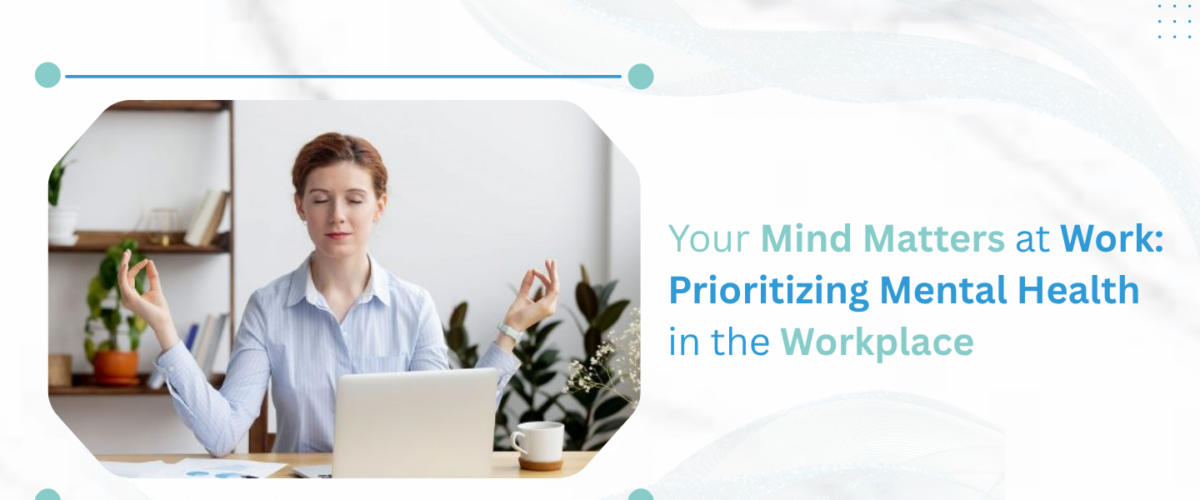
Your Mind Matters at Work Prioritizing Mental Health in the Workplace

Your Mind Matters at Work: Prioritizing Mental Health in the Workplace

In today’s fast-paced, high-pressure work environments, mental health is no longer a luxury or personal issue – it’s a critical component of employee well-being and organizational success. As we observe World Health Day, it’s essential to recognize that protecting your mental health at work is not just helpful, it’s your right.

The Hidden Cost of Workplace Stress

Work-related stress, burnout, and anxiety have become increasingly common. According to the World Health Organization, depression and anxiety cost the global economy over $1 trillion each year in lost productivity. But beyond the numbers, there are people silently struggling through deadlines, toxic environments, or the pressure to constantly be “on.”

Mental health challenges can manifest in many ways: difficulty concentrating, irritability, fatigue, lack of motivation, and even physical symptoms like headaches or insomnia. Ignoring these signs can lead to long-term issues for both employees and employers.

Why Mental Health at Work Matters

A workplace that prioritizes mental health not only fosters happier, more resilient teams but also benefits from increased productivity, stronger collaboration, and reduced turnover. Employees who feel supported are more likely to stay engaged and committed.

Promoting mental well-being at work also helps break the stigma. It shows that it’s okay to talk about challenges, seek help, and take time to care for oneself.

Practical Ways to Support Mental Health at Work

  • Take breaks regularly: Short walks, deep breaths, or a 5-minute screen break can recharge your focus.
  • Set boundaries: It’s okay to say no or to log off at the end of your workday.
  • Speak up: If you’re struggling, talk to your manager or HR. Open communication is key.
  • Practice mindfulness: Even 10 minutes of meditation a day can reduce stress and improve clarity.
  • Create a supportive environment: Encourage team check-ins and mutual respect for each other’s workloads.

Employers Have a Role Too

Companies can create mental-health-friendly workplaces by:

  • Providing access to counseling or Employee Assistance Programs (EAPs)
  • Offering mental health days or flexible work schedules
  • Training leaders to recognize signs of burnout or distress
  • Cultivating a culture of empathy and support

You Deserve to Feel Well

No job is worth your mental health. Your well-being should be a priority—not just on World Health Day, but every day.

At Veve Health, we’re here to help you navigate workplace stress, build resilience, and thrive both professionally and personally.

Let’s make mental wellness a workplace standard.

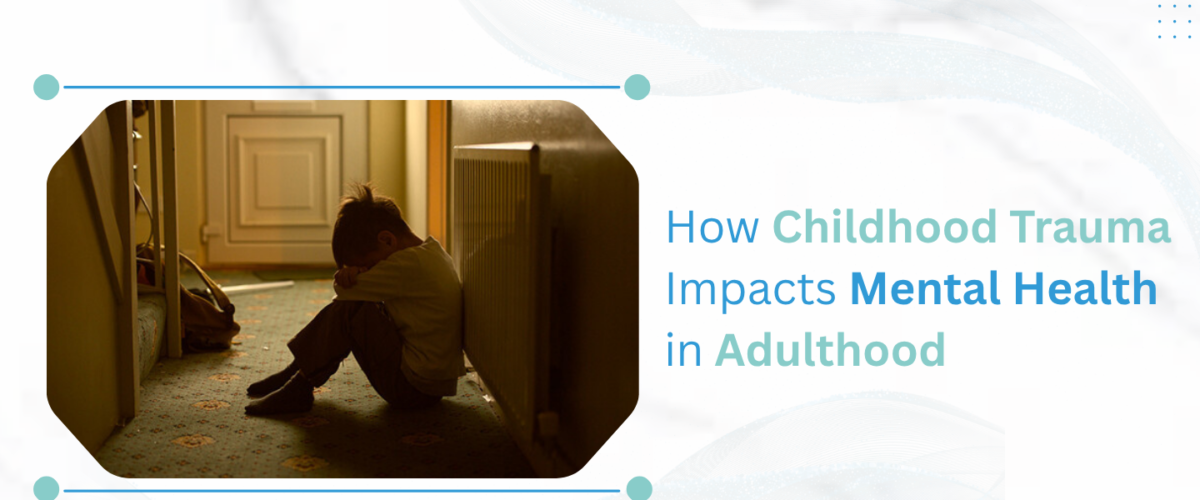
How Childhood Trauma Impacts Mental Health in Adulthood

How Childhood Trauma Impacts Mental Health in Adulthood

Childhood experiences shape our emotional and psychological development. Adverse childhood experiences (ACEs), such as neglect, abuse, or household dysfunction, can have lasting effects on mental health well into adulthood.

How Trauma Affects the Brain

Early trauma alters brain development, particularly in areas responsible for emotion regulation and stress response. This can lead to:

  • Heightened stress sensitivity
  • Difficulty forming healthy relationships
  • Increased risk of anxiety, depression, and PTSD

Recognizing the Long-Term Effects

Many adults with childhood trauma experience:

  • Trust issues and relationship difficulties
  • Low self-esteem and self-doubt
  • Substance use or other maladaptive coping mechanisms

Healing from Childhood Trauma

  1. Therapy and Counseling – Cognitive Behavioral Therapy (CBT) and trauma-focused therapy can help process past experiences.
  2. Mindfulness and Self-Care – Practices like meditation and journaling promote emotional regulation.
  3. Building a Support System – Trusted relationships provide emotional safety and validation.

Conclusion

Understanding how childhood trauma affects mental health is the first step toward healing. With professional support, individuals can break free from past wounds and build a fulfilling future.