Mental health is a big part of how we feel, think and act every day. Yet, many people feel afraid to speak up when they struggle. They worry that others will judge them or treat them differently. This unfair judgment is called stigma.
Stigma makes people feel ashamed. It stops them from getting the care they need to feel better.
Learning about mental health can change this story. One special kind of learning is called psychoeducation.
At Veve Health Services LLC, psychoeducation is an important part of the care we provide. We use it to help people turn confusion into clarity. When people have clear facts, they may feel less afraid and more ready to get help.
So, can psychoeducation reduce the stigma around mental health conditions? Let’s explore.
What Is Psychoeducation?
Psychoeducation is just a big word for learning about your mind.
Consider this: When you get a physical disease, such as a cold, you discover how medication and rest aid in the healing process. Psychoeducation is similar, but it focuses on your brain and emotions.
During a session, a care provider explains:
- What a diagnosis really means
- How symptoms affect your daily habits
- Why your brain responds to stress in certain ways
- Which treatments, like talk therapy or medicine, can help you recover
This isn’t a tough school test. It’s a relaxed, friendly chat where you can ask any question.
How Stigma Harms People
Stigma comes from a lack of true facts. Previously, people thought that problems with their mental health were a personal failing. Some believed you could simply shake off sadness or worry with enough effort.
These incorrect ideas create two main types of stigma:
- Public Stigma
This happens when society views people with mental health conditions negatively.
- Self-Stigma
This happens when a person starts to believe those bad ideas about themselves. They may feel broken, guilty, or hopeless.
Stigma builds a thick wall between a person and the help they deserve. It causes people to hide their feelings. They may attempt to support themselves and their heavy loads alone out of fear of losing a job, friends, and family.
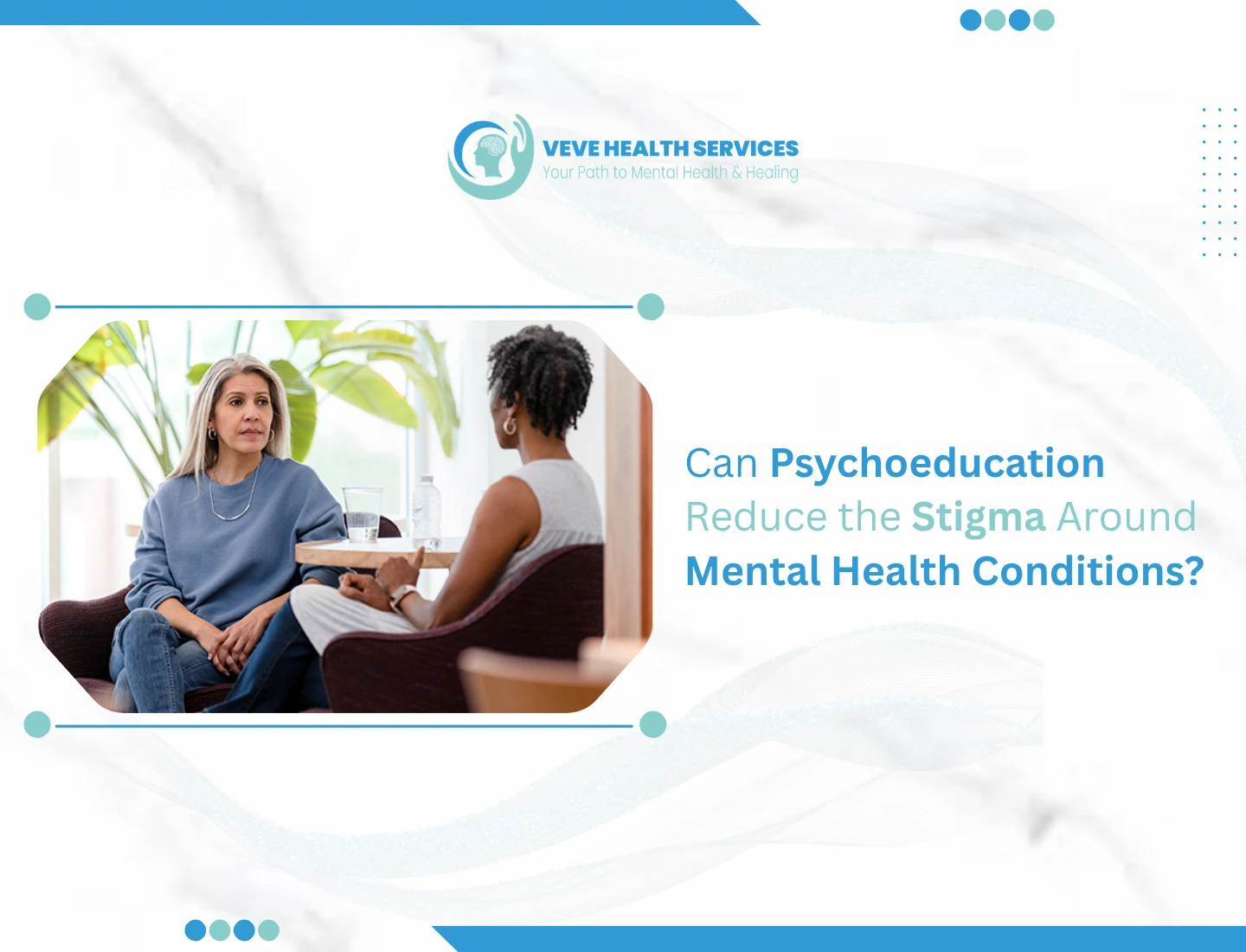
Can Psychoeducation Reduce the Stigma Around Mental Health Conditions?
Yes, it can. It provides basic facts about brain function and emotions. When we replace myths with clear information reduces fear.
Psychoeducation fights stigma in several key ways.
Moving from Personal Failure to Health Facts
When you’re uncertain about your feelings, it’s simple to hold yourself responsible. Psychoeducation reveals that anxiety, depression and ADHD are real health conditions. They are linked to genetics, environment and brain chemistry.
When you see that a mental health condition is a physical response in the body, the guilt disappears. You see that you are not a weak person. You are simply a human experiencing a health challenge that can be managed.
Giving Families Real Understanding
Stigma does not just affect the person who feels unwell. It also affects their loved ones. Family members might feel confused or angry when a loved one behaves differently.
Families involved in psychoeducation understand their loved one’s behavior. They learn that panic attacks or low mood are not intentional acts to annoy them. This shift turns confusion into care and creates a safe, gentle home.
Teaching Useful Coping Skills
Feeling out of control makes mental health conditions seem scary. Psychoeducation removes that fear by handing you practical tools to use every single day. You learn how to:
- Spot your personal triggers
- Simple breathing exercises to calm a racing heart
- Rest, sleep and food affect your daily mood
When you know how to handle your symptoms, you feel strong and capable again.
Bringing Clear Knowledge into Daily Life
Learning about your mind is the first step, but putting that knowledge to work is what creates lasting change. Here is how people use psychoeducation to make life better:
- Better Words to Speak: You learn simple words to explain your feelings to your doctor, boss, or friends.
- Early Action: You learn to notice small signs that your stress is rising so you can rest before a full burnout happens.
- Sticking to Care: You learn how your medicine or therapy works, which helps you stay on track with your care plan.
How We Help You at Veve Health Services LLC
At Veve Health Services LLC, we treat you as a whole person, not just a list of symptoms. We care for teenagers and adults aged 15 to 65 years old. Life can throw heavy challenges your way, such as:
- School stress
- Tough career pressures
Our team combines psychoeducation with other treatments, including:
- Medication management
- Psychotherapy
We create an individualized plan for each person. We meet with clients in person at our comfortable offices in Gainesville, Virginia and Rockville, Maryland.
We also offer secure online telepsychiatry visits so you can receive care right from your home.
We build a custom care plan that honors your unique goals and personal strengths. We answer all of your questions with total honesty, kindness and deep respect.
Final Thoughts
So, can psychoeducation reduce the stigma around mental health conditions? The answer is a clear yes.
When we replace misunderstanding with simple facts, stigma loses its power. People stop feeling ashamed of their feelings. Families learn how to offer true support. Communities become safer, kinder places for everyone.
It takes courage and it is a good option to ask for help. You never walk this route entirely alone.
Contact the friendly front desk team at Veve Health Services LLC today. Start your journey toward clarity, strength and true healing.
FAQs
Who can benefit from psychoeducation?
Anyone can benefit. People with mental health conditions benefit the most. But family members and friends can also benefit. Understanding mental health fosters support. Veve Health Services LLC serves ages 15 to 65.
Is psychoeducation the same as therapy?
No, but they work together. Therapy helps you process your feelings. Psychoeducation helps you understand your condition. Both are vital and often combined at Veve Health Services LLC for a holistic healing approach.