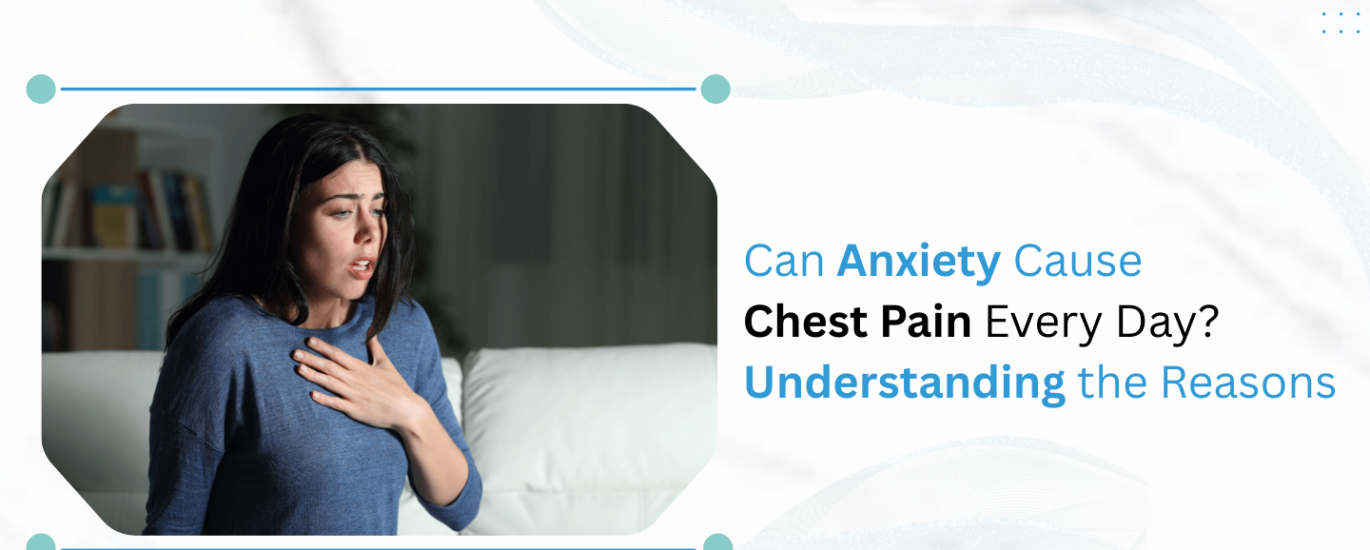
Chest pain can feel scary. You can ask yourself whether every day you can make your chest hurt because of worry or anxiety. Anxiety, heart problems, or lung issues can cause chest pain. Know why you feel pain. Also, know when to get help.
What Is Chest Pain?
Chest pain is discomfort. It may feel like tight chest anxiety or a constricted feeling. It can seem like a sting, a jab, or a heavy burden. Chest pain can be attributed to various things. Other reasons are not threatening. Other reasons can be quite severe and require urgent attention.
How Can Anxiety Cause Chest Pain?
When you are anxious, your body prepares to defend you. This is referred to as the fight or flight response. Your heart beats faster. You breathe faster. Your muscles can tighten. This can all cause the chest to tighten or be sore. Panic attacks are a potent anxiety disorder. Chest pain in anxiety attack situations is usually sudden. Many people feel pain in their chest during these times. They might have a fast heartbeat. They can sweat. They may also have trouble breathing.
Why Might Chest Pain Happen Every Day with Anxiety?
When a person feels concerned most of the time, their body will be on high alert. This can cause the pain in the chest to recur frequently. The following are some of the reasons why chest pain can occur daily:
- Your chest muscles are tight. They feel stiff.
- You breathe too fast (hyperventilating). This may cause cramping of the chest muscles.
- You experience a recurrence of panic attacks. These are capable of producing short-lived, yet severe chest pains.
- Stress is making your chest sore.
Identifying Whether Chest Pain Is Linked to Anxiety or Another Condition
It may be difficult to understand why the pain is happening. If you wonder what does chest pain from anxiety feel like, it often includes:
- A feeling of nervousness in chest, a fast heartbeat, shaking, or intense fear.
- Produces rapidly and could cease in minutes.
- May feel acute or concentrate in a position.
However, the heart pain (such as angina or a heart attack) may be more severe. The pain in the heart could be in the form of pressure, squeezing, or a heavy weight. It extends to the arm, jaw, neck, or back. It may be accompanied by dyspnea, perspiration, or nausea. When in doubt, it is an emergency, and you have to treat the pain.
When To Seek Emergency Care
Get emergency help right away. This is important if you have new or severe chest pain. Look for these signs.
- Difficult breathing or extreme shortness of breath
- The appearance of pain that expands into the arm, jaw, neck, or back.
- Slightly or extremely sensitive and disoriented.
- Excessive sweating, nausea, or light skin.
- Either a very slow or a very fast heartbeat.
It is better to be safe. In case you are concerned that the heart may be causing you pain, call an ambulance.
How Doctors Find the Cause
The doctor will examine you and inquire about your pain. They can carry out a test like heart tracing (ECG), blood tests, or breathing tests. These examinations assist in eliminating the possibility of cardiac or pulmonary issues. In case the tests of the heart and lungs are normal, the doctor might examine the anxiety or muscle causes. According to contemporary guidelines, physicians must be meticulous in examining the chest pain in order to discover the appropriate cause.
How to Stop Chest Pain from Anxiety
If anxiety is causing chest pain, these simple steps can help:
- Learn slow breathing. Breathe in for 4 counts, out for 6, and repeat.
- Do light exercise each day, like a short walk.
- Try muscle relaxation. Tighten and then relax different muscles.
- Talk to a trusted person or counselor about your worries.
- Use therapy or medicine if a doctor advises it. Many people get better with these treatments.
How We Help at Veve Health Services LLC
We are a mental health team that helps people feel better. We do evaluations and diagnose problems. We offer medicine when it is needed. We teach simple skills to handle worry. We see people by telehealth or in person. We care for all ages and treat many conditions like anxiety, depression, insomnia, ADHD, and anxiety in elderly at night.
If your chest pain is linked to anxiety, we can:
- Check your symptoms and history.
- Teach breathing and relaxation steps you can use at home.
- Offer therapy to help change worry thoughts.
- Manage medicine safely, if it will help.
- Make a care plan that fits your culture and life.
We try to make care simple and kind. We work with you to make small steps that bring real change.
When To See Us or Your Doctor
If you have chest pain that is not very strong and your heart has been checked and is fine, you can book a visit with your regular doctor or us. We can help if:
- Pain comes back often but heart tests are normal.
- Worry or panic makes your chest hurt.
- You want tools to cope with daily stress.
If your chest pain is new, very bad, or has red flag signs (see “When to Seek Emergency Care”), please get emergency care first.
Final Words
Chest pain is very scary. Some people feel it daily due to anxiety. However, a painful chest experience may be an indicator of a lung or heart issue. Always be examined in case the pain is new or sharp. In case your heart is tested to be good, then we can assist with treatment, medication, and techniques to reduce anxiety and pain.
You don’t have to tackle this alone. We are coming to hear and assist with tender sympathy. Minor steps may lead to major changes.
FAQs
Q. How can Veve Health Services LLC help me?
We do checks, teach calming skills, offer medicine if needed and see you by video or in person. You can talk to us and we will make a care plan just for you.
Q. Can exercise help?
Yes. Short walks and gentle moves can help your body calm down and ease the chest feeling.