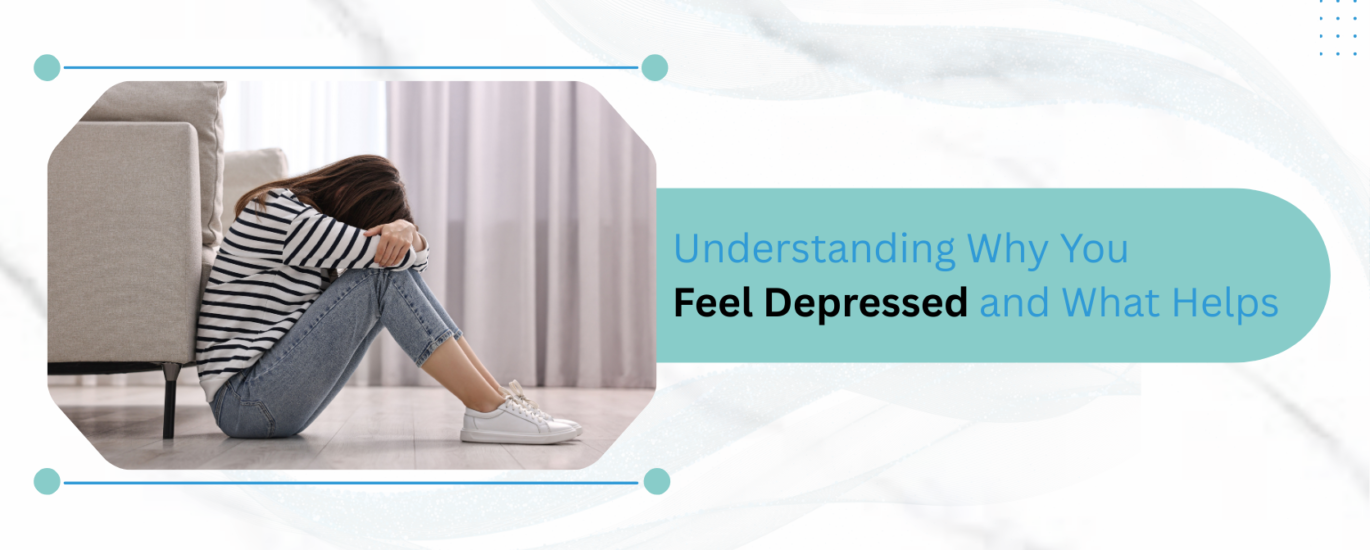
Depression isn’t just about feeling sad. It’s a mental health condition that affects
- How you think
- How you feel
- How you function in day to day life
When you’re experiencing depressive symptoms, everything from getting out of bed to making simple decisions can feel overwhelming.
What It Looks Like
Everyone’s experience is a little different when it comes to major depressive disorder, and you might have some of the following experiences:
- Feeling empty, and having this feeling persist for the majority of your day
- Not wanting to do things you previously got enjoyment from
- Noticing you are eating more, eating less, or are having more or less sleep than before
- Experiencing difficulty when it comes to concentrating or making choices
- Experiencing tiredness and other symptoms like head pain and body pain
None of these experiences means you are weak.
This is a medical condition called depression that you are experiencing, and it is a scientific fact that depression can affect the chemistry of your brain, the wiring of your brain, and even some of the hormones in your body.
Why it Happens
Your brain relies on neurotransmitters. Some of these include serotonin, dopamine, and norepinephrine.
Sometimes these systems can be disrupted, and when this happens, it can trigger symptoms of depression.
There are multiple triggers and parts contributing to the phenomenon. These include:
- Familial connections: A history of similar cases increases susceptibility to more cases.
- Chronic stress: Prolonged elevation of the stress hormone, cortisol, changes the structure of the brain.
- Traumatic events: Systemic responses to stress and related variables are subsequently altered in the aftermath of certain extreme events.
- Medical conditions: Deficiency of vitamins, chronic diseases, and diseases of the endocrine system.
- Environmental factors: Stressful life events, loneliness, and major alterations in economic status.
Cognitive Patterns That Maintain Depression
Depression affects the mood of the individual by altering the way the individual thinks.
Depression alters thinking by the introduction of cognitive distortion, which is the automatic thought process that strengthens negativity:
- All-or-nothing thinking: Thinking in black and white.
- Worst-case assumption: Worst-case is the only assumption made.
- Negative filtering: This psychological and emotional condition merely focuses on the loss only.
- Overgeneralization: Making general/broad assumptions on one occasion.
The predominant elements of a feedback cycle are these patterns and loops.
Negative thoughts create negative emotions which in turn create more negative thoughts. This network is a heavy burden and requires professional control to break it.
Professional Mental Health Support
Recovery from depression requires structured interventions that address both biological and psychological factors.
Medication Management
Antidepressants alter the brain’s levels of neurotransmitters.
Older types of the said medications have more side effects, which is why SSRIs and SNRIs have been the go-to options.
As with many medications, this will take a bit of time and work with your mental health provider to find the right fit for you.
Changes in Lifestyle
Even minor behaviors can help you to manage your mood:
- Exercise elevates endorphins and it also enhances neuroplasticity.
- Regular sleeping routines stabilize circadian activities.
- Healthy foods aid in the production of neurotransmitters.
- The loneliness can be contained with the help of social connection with friends or a volunteering service can provide emotional support.
Recovery
When it comes to strategies that you can implement, there is no reason to feel that you have to go ‘all in’ on a huge development of different strategies at the same time.
Just simple, small things, like hydration, exercise, and sleep, are a great starting point and will help a lot.
Keeping track of your mood and feelings will help you to see what habits are causing positive or negative changes in your feelings.
It is highly important to report to your care providers what is or is not helpful.
It is very helpful to have professionals who can assist you because they can provide you with a variety of techniques depending on your individual needs.
Next Steps
Our mental health professionals at Veve Health Services understand the multifaceted nature of depressive disorders and could come up with a personalized care plan, which would consider your unique needs.
You can rely on us to be there with you on your journey to wellness, whether this is your first depressive episode or to help you with the chronic symptoms.
Get an appointment.
Depression FAQ
What is the duration of the depressive episodes?
The current major depressive episodes can take up to 14 days. Without treatment, the period can take months to years.
Some patients experience symptom improvement within a very short period of time following treatment, or within six to twelve weeks.
Do you reckon that depression may fade away without the services of a mental health professional?
In mild cases of depressive episodes, the patient can get better on their own.
Regardless, with the help of a mental health expert, the patient would go through a depressive episode within the shortest duration possible.
Failure by the patient to seek help may cause and further increase in depression severity.
Do depression and sadness mean the same thing?
Sadness is used to shield our hurt. Depression is a more chronic disorder that is disabling.
Is medication necessary for depression?
Not always. Psychological interventions on their own could be useful for mild to moderate depression.
Moderate to severe depression on the other hand normally needs medicine and encouragement in order to yield the most positive results.
Your treatment team will be able to recommend the most appropriate course of action.