
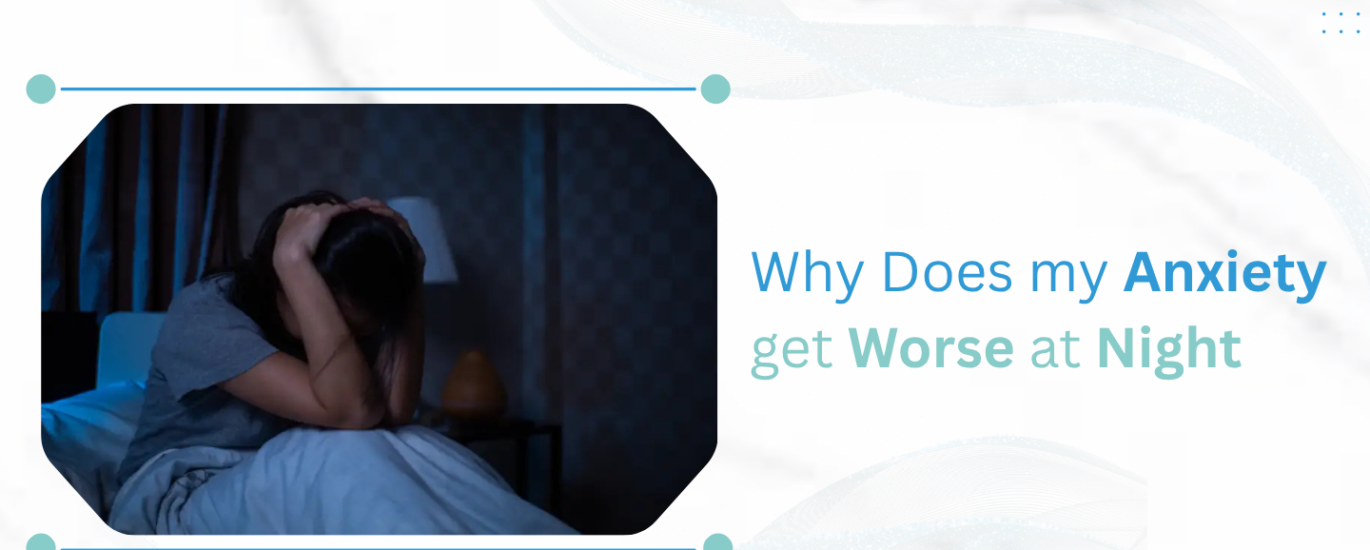
Many people feel calm during the day. But they often feel more anxious at night before bed. It is very common, and it may be a scary and lonely experience. At night, the world becomes silent. There is more space in your mind to think. Small concerns can seem larger with a lesser number of sounds, less work, and less human contact.
Why Anxiety Increases at Night
There are many reasons why you might get anxious at night. There are those associated with your body. Others are associated with what you think.
You can work, go to school, spend time with family, or do chores during the day. Those are reduced in speed when night falls. Worry may begin to fill the space in your mind.
Common reasons include:
- Fewer distractions during the night
- Fatigue following a hard-working day
- Worry about the next day
- Quiet rooms where thoughts are louder
- Sleep problems can increase stress
- Want to be alone with your thoughts
When this occurs frequently, your body will start anticipating stress before sleep and it can become even more difficult to relax.
How Your Body Responds: Night Anxiety Symptoms
When you experience anxiety at night time, it is not just in your thoughts. It also affects your body. When you feel anxious, your body may act as if there is danger, even when there is none.
You may notice:
- A fast heartbeat
- Tight muscles
- A restless feeling
- Shallow breathing
- A warm or shaky body
- Trouble falling asleep
At night, these signs may feel stronger because you are paying more attention to them. A small body change can feel huge when the room is quiet and dark.
What Thoughts Can Do at Night
Nighttime can make the mind race. You may think about mistakes from the day. You may worry about tomorrow. You may replay old pain or fear things that have not happened yet.
Some common anxious thoughts are:
- “What if I cannot sleep?”
- “What if tomorrow goes badly?”
- “What if something is wrong with me?”
- “Why do I feel this way again?”
These ideas may be cumulative. The farther you attempt to drive them away, the noisier they might become. This is why gentle steps are more effective than combating the thoughts.
Simple Ways: How to Stop Night Anxiety
You do not need a perfect routine to feel better. Small steps can help your mind and body slow down.
Try these ideas:
- Keep the same bedtime each night
- Turn off bright screens before sleep
- Sip warm tea or water
- Take slow breaths
- Write your worries in a notebook
- Stretch or do light movement
- Keep your room calm and quiet
- Use soft light instead of bright light
You can also make a short bedtime routine. This helps your brain learn that it is time to rest.
A simple routine may include:
- Wash your face
- Put away your phone
- Read a few easy pages
- Breathe slowly for one minute
- Lie down at the same time each night
Things to Avoid Before Bed
Some habits can make anxiety worse at night. You do not need to stop everything at once. Just notice what makes your mind feel more awake.
Try to avoid:
- Too much caffeine late in the day
- Long phone use in bed
- Heavy news before sleep
- Stressful talks right before bed
- Skipping meals and then feeling shaky
- Too much sugar at night
If your brain feels active after these things, it may be harder to settle down.
How We Support You at Veve Health Services LLC
We know each person is different. That is why we take time to understand your full story. Our care starts with a careful evaluation. We listen to your symptoms, your stress, your sleep and your daily life. Afterward, we develop a plan that aligns with your needs.
Our services may help with anxiety in these ways:
- Evaluations and diagnosis help us understand what is causing your symptoms
- Medication management can support some people when anxiety is hard to control
- Psychoeducation helps you learn what anxiety is and how it works
- Telepsychiatry and in-person visits give you flexible care options
- Specialized programs support different needs with focused care
- Autism spectrum disorder support helps people who may need a different kind of care plan
We also care about the whole person. That means we look at stress, sleep, emotions, culture and daily habits. We aim to empower you to feel more resilient, secure, and in command.
When to Ask for Help
Anxiety at night can happen sometimes. If this happens a lot, it might be time to get help.
You may need help if:
- You are waking up with anxiety or cannot sleep well most nights
- Your worries feel too big to handle
- You feel tense or scared at bedtime
- Anxiety is affecting school, work, or home life
- You feel tired all day because of poor sleep
- Your stress does not improve on its own
Getting help is not a weakness. It is a smart step toward feeling better.
A Gentle Reminder
If your anxiety at night gets worse, you are not alone. It doesn’t imply that you have any issues. It means your mind and body may need more support and care.
With the right help, better sleep and calmer nights can become possible. At Veve Health Services LLC, we are here to help you understand your anxiety, build healthy habits and find the right plan for your needs.
A peaceful night may start with one small step today.
FAQs
Q. Can tiredness make anxiety feel bigger?
Yes. When you are tired, stress can feel stronger.
Q. Why do I think so much before sleep?
Your day slows down, so your thoughts may get louder.