Have you ever looked at a big garden full of flowers? Some flowers are tall and bright red. Some flowers are small and yellow. Some flowers need a lot of sunshine to grow big and strong. Other flowers grow much better in the shade. Children are just like those flowers in the garden.
Every single child is completely different. Every child learns in their own special way. This is very true for children with autism.
Veve Health Services LLC offers individualized psychiatric care for children on the autism spectrum.
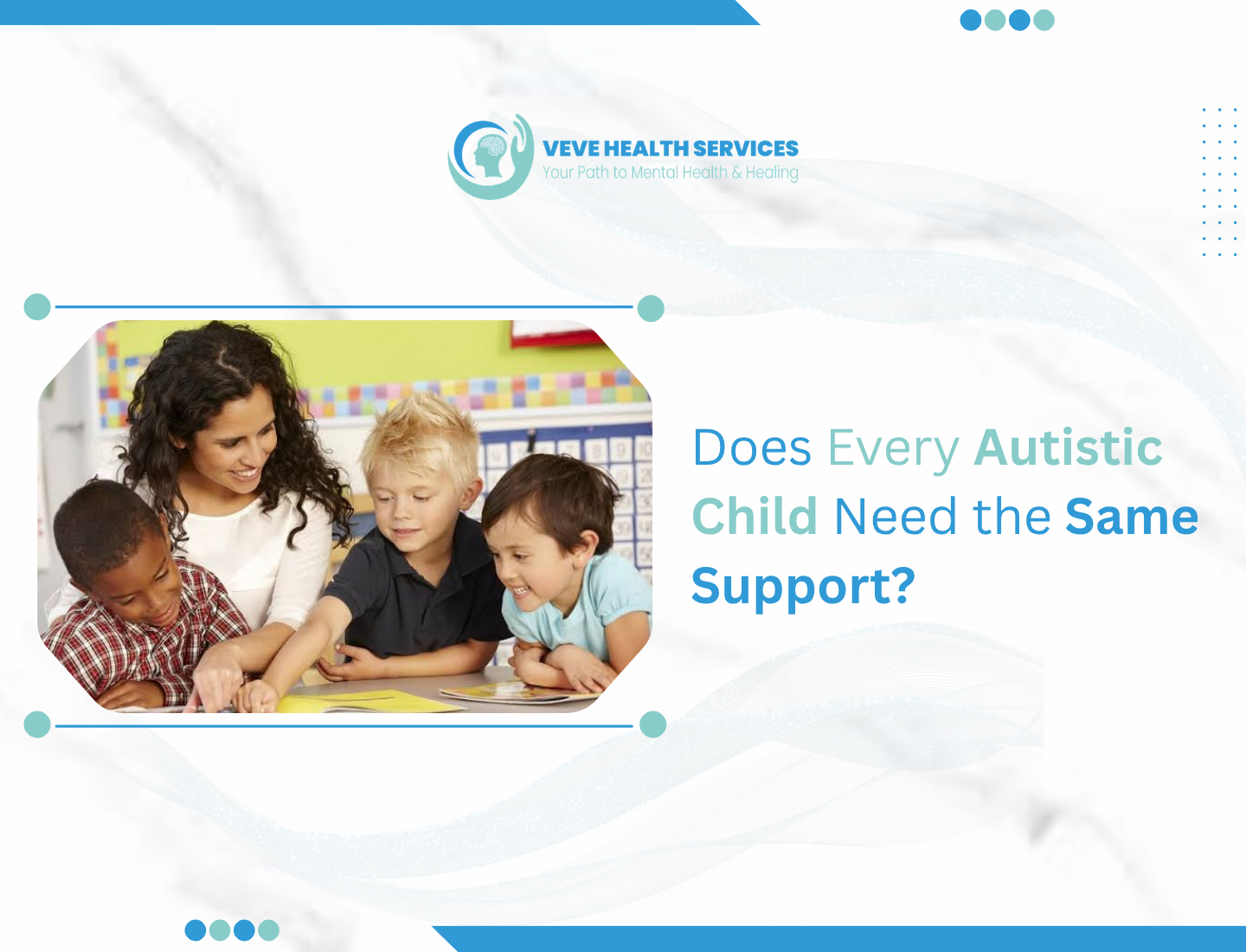
So, we have a big question to answer today: Does every autistic child need the same support?
Let’s talk about it.
What Is Autism Spectrum Disorder?
Autism Spectrum Disorder (ASD) is a developmental condition that affects how a person communicates, learns and experiences the world. Autism can look very different from one child to another.
Some children use many words and some use few. Some enjoy busy places, while others find noise and bright lights hard to manage.
Autistic children may also have strong interests, good memory, or special ways of solving problems.
Autism is not a bug you catch. It is just a different way the brain works. A psychiatric evaluation helps providers understand a child’s unique brain, goals and struggles.
At Veve Health Services LLC, we offer comprehensive mental health evaluations to help you gain clarity, direction and a solid foundation for mental health treatment.
Does Every Autistic Child Need the Same Support?
No, every autistic child does not need the same support. Autism is a spectrum, which means it affects every child differently. Support should be based on the individual child.
Imagine giving the same size shoes to every student in a class. That would be silly. Some children would trip. Others would feel pinched. Autism care works the same way. We cannot give the same care plan to everyone.
- A child who is great at math but has trouble making friends needs a certain kind of help. They might need a teacher to show them how to say hello.
- Another child might have a hard time sitting still in a noisy classroom. They might need a quiet room with soft lights to do their work.
When we give a child the right tools, they can do amazing things.
At Veve Health Services LLC, we focus on what a child can do, while also helping with things that make daily life harder.
Key Differences in What Children Need
Every child on the spectrum experiences daily life in their own way. Here are four main areas where children often need different types of help:
- Communication Styles: Some children speak with clear words. Others use sign language, pictures, or speech tablets. Support helps children express their thoughts in the way that feels best for them.
- Sensory Feelings: Bright lights, loud sounds, or rough clothes can feel uncomfortable to an autistic child. One child might love tight hugs. Another child might not like being touched. Care plans help parents create calm spaces for their child.
- Handling Routine Changes: Sudden changes in a daily routine can feel scary. Some children need visual schedules to know what comes next. Other children handle changes better when they carry a favorite toy.
- Managing Big Feelings: Stress and worry can build up fast. Children need simple tools to stay calm when their surroundings feel too loud or busy.
How Families Learn and Grow Together
Parents and family members need guidance, too. Learning how an autistic mind works helps parents understand what their child experiences at home and school. This type of learning is called psychoeducation.
When families learn together, home life becomes much calmer. Parents learn why their child feels stressed by sudden changes. They discover simple ways to help their child feel safe during hard moments. Families also learn how to speak up for their child at school.
At Veve Health Services LLC, we work with families to understand their concerns and create an individualized plan of care. Through psychoeducation, we teach the family how to support the child at home.
How Veve Health Services LLC Creates Individualized Autism Support
Veve Health Services LLC begins by learning about the child and family.
We do a full mental health check-up to understand what the child is good at and what is hard for them. We also consider emotional and mental health concerns that may affect daily life.
We carefully review whether medication may help with a related concern. If medication is used, we monitor progress, benefits and side effects. We also explain the treatment plan to families so they can make informed choices.
We also discuss coping skills, routines, emotional needs and ways to respond to challenges.
We also offer 24/7 open support. This means we are here when you need us. Whether you have a question, a concern, or just need someone to talk to, we are available.
We offer telepsychiatry and in-person visits so families can choose an option that works for them.
Building a Bright and Happy Future
Every child wants to feel loved. Every child wants to feel understood by their friends and family. Every parent wants to see their sweet child smile every single day. An autistic child can do wonderful things when they have the right friends helping them. It all starts with the right plan.
We must celebrate the things that make them special. We must cheer for them when they do a good job and give them a warm, helping hand when things get hard. There is no single rulebook for autism. The only rule is to care for each child exactly as they are. When we do this, we open the door to a very bright future.
If you want to find the perfect care plan for your child, please reach out today. Seeking help is the first step toward healing! Veve Health Services LLC is ready to be your partner. Let us build a very happy and healthy life for your child together.
FAQs
Should parents be involved in autism care?
Yes. Parents and caregivers provide important information about the child’s daily life. Family involvement can help make support more consistent.
Does medication treat autism?
No. Medication does not treat autism itself. It may help with certain related concerns when a qualified provider believes it is appropriate.


No comment