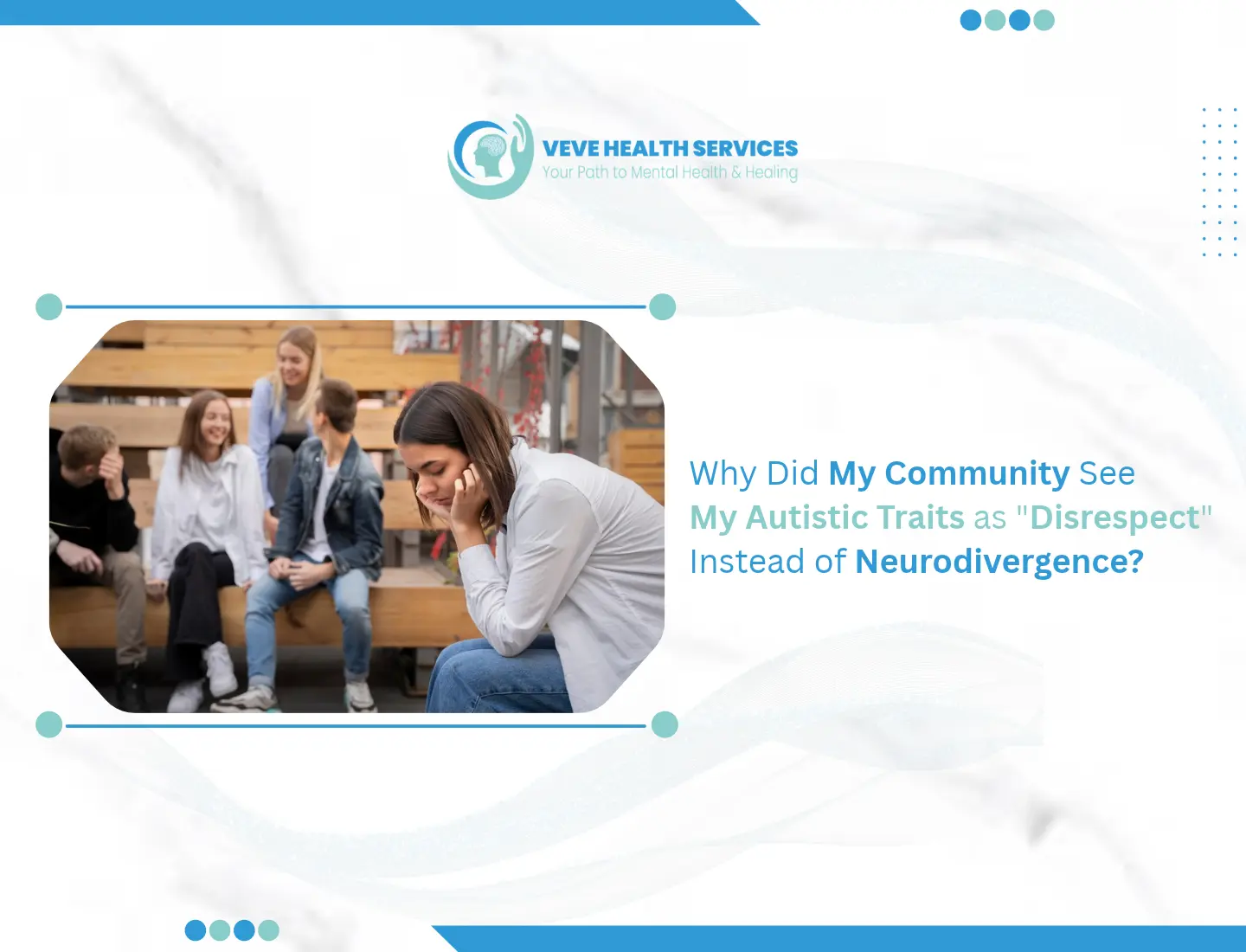
You look away when an elder speaks. You say exactly what you think. You skip small talk. To you, this feels natural. To your community, it may look rude.
If this sounds familiar, you’re not alone. Many autistic people are labeled “disrespectful” long before anyone considers neurodivergence.
At Veve Health Services LLC, our mission is to educate the public on neurodiversity and provide access to behavioral healthcare that focuses on mental health and overall quality of life.
We explain why people in your community may misread your autistic traits and what may really be happening, and what to do about it.
What “Neurodivergence” Means
“Neurodivergent” is an umbrella term. It means a person’s brain works differently from what many people expect. Autism is a type of neurodivergence, but not all neurodivergence is autism.
A neurodivergent brain is not defective. It might just be different when it comes to speech, sound, touch and social cues. Most communities never learned this, so they judged autistic behavior using their own rules of good manners.
Autistic Traits That Are Often Seen as Disrespectful
Some autistic traits look very different from what people call “polite.” Here are the ones that cause the most trouble:
- Little eye contact: In many cultures, looking someone in the eye shows respect. Many autistic individuals find eye contact uncomfortable and listen better when looking away.
- A flat or loud voice: The tone of voice may not match the feeling inside, so others think the person does not care.
- Very direct answers: An honest answer without soft words can sound harsh, even when the person means well.
- Skipping greetings or small talk: Some autistic people do not know when to say hello or find casual chat tiring.
- Leaving noisy gatherings early: Loud rooms and bright lights can be too much, so stepping out may look like a lack of respect.
- A calm face during big feelings: Others may think the person is not moved by sad or happy news.
Why Communities Misread These Traits
Each community has unwritten rules. Most children imitate adults and learn them; that’s how. Not many autistic children learn these “rules” as they go, and thus may do so without knowing it. Some know this as the “double empathy problem.
It means that autistic and non-autistic people often misunderstand each other, and the confusion goes both ways. The autistic person is not the only one missing something.
How Culture and Upbringing Can Make It Harder
In close families and tight communities, respect often means:
- Greeting elders
- Sitting quietly
- Agreeing in a certain way
If a child doesn’t do these things, adults can assume that the child is being stubborn. Some family members also fear that neighbors will comment on their autistic child’s situation; therefore, they do not discuss autism at all.
Girls and women may feel extra pressure to be nice to others and please them, therefore potentially suppressing certain aspects of themselves for extended periods of time.
Because of this, many people only learn they are autistic as adults.
How Being Misunderstood Can Affect Your Mental Health
Being told again and again that you are disrespectful can leave deep marks. Over time, it may lead to:
- Feelings of shame or low self-worth
- Anxiety about every social event
- Depression and loneliness
- Burnout from “masking,” which means hiding your natural behavior to fit in
- Trouble keeping friendships or jobs
These struggles are real, and they can be treated with the right support.
Simple Steps to Help People Understand You
You do not have to change who you are. These steps can make daily life smoother:
- Learn your own traits. Notice which situations feel hard and why. A clear picture of your needs makes it easier to explain them.
- Pick one trusted person first. Share what autism means for you with someone kind, such as a cousin, a friend, or a teacher.
- Use short, clear sentences. Explain your needs in a calm way, and give examples people can picture.
- Ask for small changes. A quieter seat, a written message, or a short break can make a big difference.
- Get a professional opinion. A proper evaluation gives you words and facts that others tend to respect.
How to Explain Your Needs Without Feeling Ashamed
It can be useful to have some stock responses if you find yourself anxious about something:
- “I tend to focus if my eyes are averted. Please understand that I’m listening.”
- “I don’t mind cutting a session short. I get overstimulated by loud environments.”
Saying these things kindly and clearly often changes how people react. You are providing information; you are not making an excuse.
How Families and Communities Can Do Better
Families, schools, and workplaces can help by:
Judging actions by intent, not only by how they look
- Welcoming different ways of showing respect
- Giving clear instructions instead of expecting people to guess
- Offering quiet spaces at events
- Listening to autistic voices before drawing conclusions
When to Seek Professional Help
Consider reaching out if:
- You think you may be autistic
- These conflicts bring about anxiety, low mood, sleep problems, or burnout
Evaluation can provide you with words for your experience. It will not alter the way you are, nor can it guarantee instant understanding.
Veve Health Services LLC offers autism care with individualized psychiatric care, psychoeducation, and medication management for people on the autism spectrum. A psychiatric evaluation can help you understand your traits and any related concerns, such as anxiety, depression, or ADHD.
Psychoeducation services can help you and your family learn what these traits mean and how to talk about them.
If applicable, medication management can be offered to help manage symptoms that may be associated with the disorder, such as anxiety or sleep disturbances.
Appointments are available through telepsychiatry or in person at the Rockville, MD and Gainesville, VA, offices.
FAQ
Is avoiding eye contact always a sign of autism?
No. Shyness, culture, and anxiety may all contribute to being shy. Only a trained professional can tell the difference.
Do I have to tell my community I am autistic?
No. Disclosure is a very individual thing. Some people will tell you everything, some will tell you things that may help, and some will not reveal any information.
Is it disrespectful to ask for accommodations?
No. Asking for a quieter room or a short break is an access request, not a lack of respect.
Take the Next Step
You are not a bad person because you have these autistic characteristics. These are a part of your life experience. It’s not necessary to explain alone. With the right knowledge and support, you can:
- Build trust
- Take care of your mental well-being
- Live with confidence
To book a visit, call Veve Health Services at +1-888-407-8533 or schedule online through our website.
This article is for general information only. It is not an alternative to a professional assessment, diagnosis, or treatment. Call or text 988 or dial 911 if in crisis.